
The ATMP Issue: In this issue, we focus on the manufacturing of advanced therapy medicinal products, the costs associated with patient access, and readiness.

Cell therapies, especially autologous chimeric antigen receptor T cell (CAR T cell) treatments, are transforming personalized medicine, bringing new hope to patients with conditions once thought untreatable. However, the manufacturing processes for these therapies remain predominantly manual, presenting significant challenges in scalability, consistency, and making these treatments more widely...

Advanced therapy medicinal products (ATMPs), which include cell and gene therapy (C>) products, frequently require handling steps between quality control release and patient administration. These steps take place directly at the point of care and are especially critical for C>s with limited shelf life after preparation.

Advanced therapy medicinal products (ATMPs) have the potential to treat life-threatening, incurable conditions. But access to these therapies remains challenging due to the nature of current ATMP manufacturing models. This article explores solutions, focusing on standardized processing and shared knowledge as gateways to automated, robotic manufacturing and decentralized production.

For patients who depend on personalized medicine, turnaround time matters. However, moving quickly is difficult for cell therapy companies because designing personalized therapies presents unique challenges unknown in traditional biotechnology. In this article, we’ll examine five strategies to help cell therapy companies develop resilience against these challenges, positioning themselves to...

Controlling contamination in environments where biological medicinal products are handled is of paramount importance to ensure the safety of personnel, sterility of drug products, and protection of the surrounding environment. The application of vaporized hydrogen peroxide (vH2O2) has emerged as a promising method for postproduction decontamination due to its ability to...

Advanced therapy medicinal products (ATMPs) are transformative therapeutics that are realizing increasing gains in market approvals, yet are expensive products to produce. To enable a broader application of these medicinal products in the marketplace, the cost of goods (COGs) sold should be addressed early in development with a focus on reduction of cost to the patient.

A growing segment of the advanced therapy medicinal product (ATMP) landscape, which includes gene therapies and cell-based treatments, relies heavily on viral vectors for efficient gene delivery. The increasing demand for these therapies requires a robust, scalable, and cost-effective manufacturing solution.

The 2025 ISPE Biotechnology Conference, scheduled for 2–3 June in Boston, MA, US, and virtually, will bring together leading pharmaceutical and biopharmaceutical manufacturers, technology providers, academic...

ISPE is an officially recognized stakeholder of the European Medicines Agency (EMA), the agency responsible for the monitoring of medicines in the European Union. One of the ways ISPE helps its members stay at the forefront of industry challenges and changes is by interacting with regulatory authorities in the countries our members represent.

Massimiliano Cesarini, MEng, was named CEO of Biogenera SpA, Bologna, Italy in 2024. He began his career at Duferco Engineering in energy generation, then moved to Comecer Group, holding roles as project and product manager, and global sales manager for the pharma and advanced therapy medicinal product (ATMP) division. He eventually joined Omnia Technologies Group establishing the Omnia Life...

Krisha Patel is Co-Founder of Assurea LLC, a digital compliance consulting firm that provides IT and validation services, software assurance, and custom artificial intelligence solutions for biotech companies. With a degree in bioprocessing science and more than 12 years of experience in computer system validation and quality assurance, Patel has worked with cell and gene therapy companies,...

For companies focused on producing lifesaving treatments, the positive effects of employee health, well-being, and satisfaction can be easily overlooked, but those positive effects are real. An investment in people results in better research, testing, and manufacturing processes, which leads to more efficient delivery of therapies and treatment to patients worldwide.


Organizations must continually evolve and adapt in order to grow, sustain, and stay competitive. No organization survives for a long period of time if it does not change with the times. The pace of change is accelerating, and the scale of disruptive market forces is growing by the day.


This article describes a practical and pragmatic approach to the management of computerized system life cycle and information technology (IT) process records. The objective is to effectively achieve and maintain compliant GxP-regulated systems that are fit for intended use, and to support patient safety, product quality, and data integrity.

Risk assessment is essential, however, risk assessment is of limited value if it is not conducted by a team with the necessary process, product, and functional understanding. Conducting risk assessments prematurely may lead to invalid assessment of overall risks. Conducting risk assessments too late will limit the opportunity to address design flaws and effectively test processes and...

This special anniversary article addresses the history and milestones that define the GAMP Community of Practice (CoP). In celebration of the 25th anniversary of the creation of GAMP Americas, we reflect on the vital role GAMP Americas has played in that journey. We commemorate key accomplishments of its members, share recent activities, and look ahead to the future of GAMP Americas.

This article describes the numerous activities in the commercial quality control (QC) network that aim to replace in vivo assays with alternative methods in the course of production and release.1

Reducing the pharmaceutical industry’s carbon footprint has become a management responsibility. This article introduces some of the key points, actual methods, and practical examples of our implementation to reduce carbon emissions from pharmaceutical manufacturing facilities in Southeast Asia.

Pharmaceutical and biotechnology companies employ platform analytical procedures in the development stages of their synthetic and biological drug products and are beginning to leverage them for commercial products. This shift is supported by the acceptance of platform procedures in the recently adopted ICH Q2(R2) and ICH Q14. Six case studies are shared in this article to highlight how...

The pharmaceutical industry faces considerable challenges throughout the development, manufacturing, and supply of medicines, largely due to the intricate and divergent global regulatory landscape. The adoption of structured data standards and utilization of cloud-based platforms offer immense potential to overcome these challenges by facilitating faster and more efficient global...
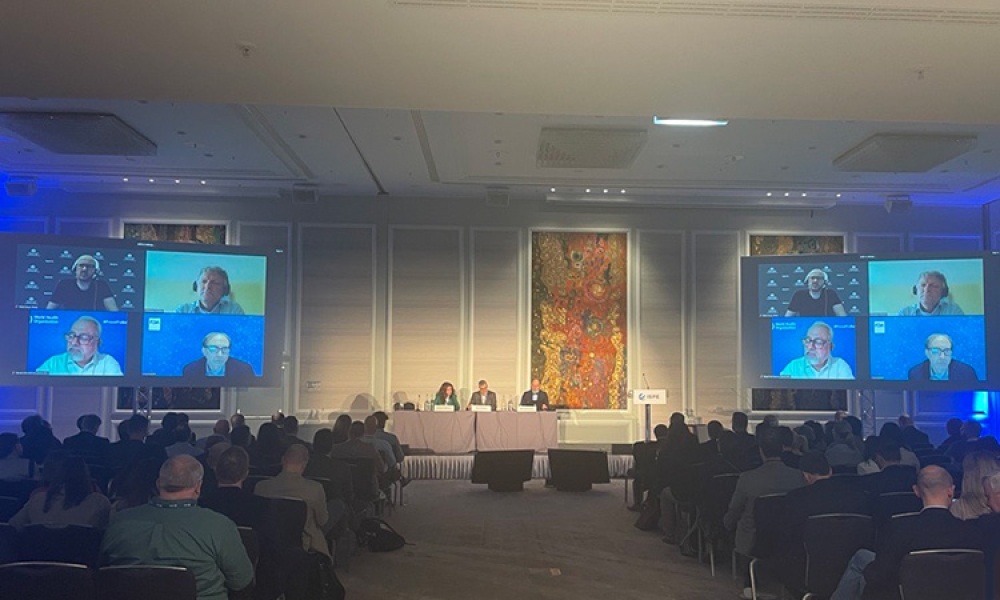
On 13 March 2024, ISPE concluded the 2024 Aseptic Conference with a regulatory panel question and answer session. Attendees were invited to submit questions to representatives from the Austrian Agency for Health and Food Safety (AGES), US Food and Drug Administration (FDA), Regierungspraesidium Tübingen (RP Tübingen), World Health Organization (WHO), Therapeutic Goods Administration (TGA), and...

The pharmaceutical industry stands at the precipice of a revolution as emerging digital technologies provide new opportunities to boost productivity through continuous process improvements. The Pharma 4.0™ framework, an adaptation of the broader Industry 4.0 movement, aims to transform how drugs are produced and delivered.

With the approval of the first gene edited therapeutic in 2023, production of gene edited therapies is accelerating, introducing tough decisions for manufacturing development. Gene editing therapy production is complex, often involving multi-modality manufacturing operations in one facility to produce a single therapeutic. This article considers whether retrofitting an aging monoclonal...


Currently, there is no single guidance document providing a comprehensive roadmap for executing digital validation. While elements from ISPE GAMP® Guides Series and the ISPE Baseline® Guide: Volume 8 – Pharma 4.0™, apply to digital validation, there is no consolidated resource addressing common questions. The authors of this Concept Paper therefore advocate for the development of a Good...

A set of principles to be considered in the journey to adopting and deploying an architecture capable of supporting Pharma 4.0 Plug & Produce capability.


At the 2025 ISPE Europe Annual Conference held 12-14 May 2025 in London, the European Medicines Agency (EMA)’s Head of Quality and Safety of Medicines Department, Evdokia Korakianiti, highlighted the many...


In a world defined by rapid scientific progress and evolving market demands, the ability to adapt, innovate, and sustain excellence is no longer optional—it’s essential. The 2025 ISPE Biotechnology Conference,...

Each issue of Pharmaceutical Engineering® covers a wide range of topics relevant to the pharmaceutical industry, including scientific, technological, and regulatory advancements throughout the entire...

At the 2024 ISPE Annual Meeting & Expo, a session titled “Regulatory Surveillance and Advocacy” was presented by Christine Moore, PhD, Executive Director, Quality Systems and Compliance at Organon LLC. Moore spoke about the definition of regulatory surveillance of policy and standards, and going beyond surveillance into regulatory intelligence, specifically related to inspections and...


Pharma 4.0™ represents a transformative shift within the pharmaceutical industry, redefining how medicines are developed, manufactured, and delivered. At its core, Pharma 4.0 involves the integration of advanced digital technologies...

Biomanufacturing is advancing rapidly, and as the industry evolves, so too must the facilities that support it. Therapeutic modalities are becoming more diverse, and with the increasing demand for speed, flexibility, and sustainability in production, biopharmaceutical facilities must be prepared to meet these new challenges.

ISPE’s Q12 Implementation Team continued its series of training events with a well-attended course for Singapore’s Health Sciences Authority (HSA) in November.

The Dr. Antonio Moreira Memorial Professional Development Fund was established in 2024 in honor of Dr. Moreira, a former Chair of the ISPE Foundation Board of Directors who passed away that same year. As a 20-year member of ISPE, he was a dedicated leader who consistently championed the ISPE Foundation and tirelessly promoted the importance of student development and engagement.

Niranjan S. Kulkarni, PhD, was honored with the ISPE Max Seales Yonker Member of the Year Award at the 2024 ISPE Annual Meeting & Expo in Orlando, Florida, US.

Effective containment systems in a pharmaceutical manufacturing facility are essential to protect the health of workers, the environment, and patients receiving the medications. Particles released into the facility can cause adverse side effects to facility employees, and particles released outside the facility can harm the atmosphere and nearby waterways.

The ISPE Commissioning & Qualification (C&Q) Community of Practice (CoP) conducted a survey in 2023 on the adoption of integrated C&Q, specifically on the use of paperless digital systems for planning, executing, and reporting C&Q activities. The survey revealed that 74% of respondents planned to use Digital Validation Tools (DVTs) for C&Q by 2024.

ISPE has launched a new feature on ISPE Engage, providing members with a portal to explore volunteer opportunities across the organization.

Empowerment is providing employees with the autonomy, tools, and trust to make decisions that impact their roles and the organization. It requires a shift from the more traditional directive or micromanagement style to fostering a sense of ownership and accountability.


Each year, the ISPE Europe Annual Conference includes a dedicated Women in Pharma® session, providing an open and collaborative space on professional and personal development. The session fosters meaningful discussions, mentorship, and knowledge-sharing to empower individuals and drive positive change within the industry.

Biopharmaceuticals continue to proliferate in the pharmaceutical industry leading to advancements in advanced therapy medicinal products (ATMPs), cell and gene therapy (C>), and other biological products. ISPE supports its membership base of over 22,000 members across more than 120 countries by informing strategies, supporting solutions, and improving processes in this continually...
Sponsored content is the sole responsibility of the authors and is not endorsed, reviewed, nor a published article of Pharmaceutical Engineering® magazine or ISPE.

Environmental control plays a critical role in pharmaceutical manufacturing, particularly when it comes to managing humidity. From protecting product integrity to supporting regulatory compliance and energy efficiency, humidity control is essential across the production chain. This article introduces how Munters desiccant dehumidification systems offer a reliable and sustainable solution to...

Formulation challenges in pharmaceuticals are increasing in complexity due to the rise of thermolabile and biopharmaceutical products, requiring a deep understanding of physicochemical processes and drug-excipient interactions. Freeze-drying is a widely used method to stabilize sensitive APIs such as pantoprazole sodium sesquihydrate, which presents cosmetic defects like cake cracking despite...

ABM uses advanced technology and precise tracking to ensure cleanroom compliance, prevent contamination, and safeguard quality. Our expert solutions optimize performance and meet rigorous industry standards

Pharmaceutical companies can no longer rely on traditional drug development methods to keep pace with complex therapies and evolving regulatory demands. This Industry Insight examines how digital transformation, combined with Quality by Design (QbD) principles, improves efficiency, ensures compliance, and enhances product quality from the start.

Cleaning surfaces and equipment in controlled environments has historically involved a variety of methods, but usually involves some manner of moving a cleaning material (wipe, mop, etc.) across a surface, often in the presence of a liquid solution. In operations in controlled environments, the challenge is in maximizing the ability, consistency, and efficiency to remove contaminants that are...

Whether networking at events or collaborating through our Communities of Practice, the value of an ISPE membership is in the connections made between pharmaceutical industry professionals and Regulators to collaborate on solutions to common goals and challenges.

Are you a subject-matter expert in the global pharmaceutical industry? Are you brimming with knowledge about the latest technical developments or regulatory initiatives? Have you found an innovative solution to a real-world challenge?
Contribute your knowledge and experience to the always-evolving pharmaceutical industry!
Do you know someone whose profile or work should be featured in Pharmaceutical Engineering? Contact ISPE Publications Department.