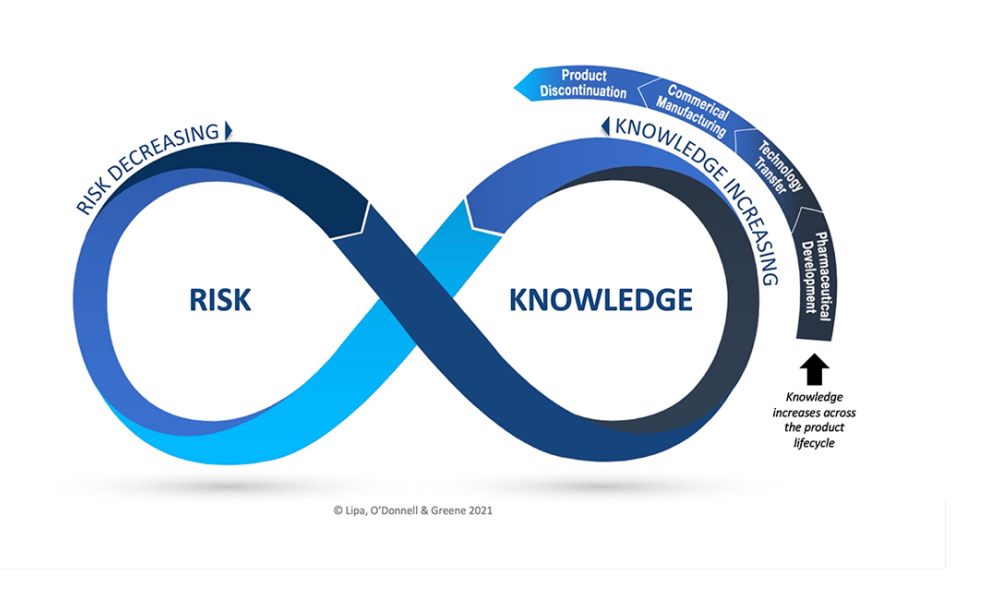
Knowledge management efficiently handles information and resources within a commercial organization. The purpose of knowledge management is to share perspectives, ideas, experiences, and information; to ensure the information is available in the right place at the right time to enable informed decisions and to improve efficiency by reducing the need to rediscover knowledge. Knowledge management consists of three areas: accumulating, storing, and sharing knowledge.

iSpeak Blog
Advancing Pharmaceutical Quality Cultural Excellence
Cultural Excellence is the expressed and implied ways in which an organization operates. Excellence…
iSpeak Blog
ISPE Advancing Pharmaceutical Quality Program Complete
ISPE is pleased to announce the complete Advancing Pharmaceutical Quality Program (APQ) Program is…

Product
APQ Guide: Cultural Excellence
Cultural excellence is the expressed and implied ways in which an organization operates. Excellence…

Product
APQ Guide: Process Performance & Product Quality Monitoring System (PPPQMS)
The Process Performance and Product Quality Monitoring System (PPPQMS) is a fundamental element of…

Video
Advancing Pharmaceutical Quality, Change Management
Complimentary Learning Level: Intermediate Session Length: 1.5 hour The ISPE Advancing…

Video
Life Cycle Approach to Process Validation- Stage 3 Implementation
Life Cycle Approach to Process Validation- Stage 3 Implementation Complimentary Learning Level…
Video
QRM Based Integrated C&Q Series - Engineering Change Management
QRM Based Integrated C&Q Series - Engineering Change Management Complimentary Learning Level…

PE Articles
Process Architecture and Integrated Design in the Pharmaceutical Sector
Large engineering companies specializing in the industrial production sector have increasingly been…

News
Bayer's Supply Network-Centric Approach to Digitalization
Chris Grail, Bayer Pharmaceutical's engineering and maintenance excellence lead, shared insights on…

Product
GAMP RDI Good Practice Guide: Data Integrity by Design
Published: October 2020 Pages: 176 Table of Contents Special Pricing for Emerging Economies Data…

Product
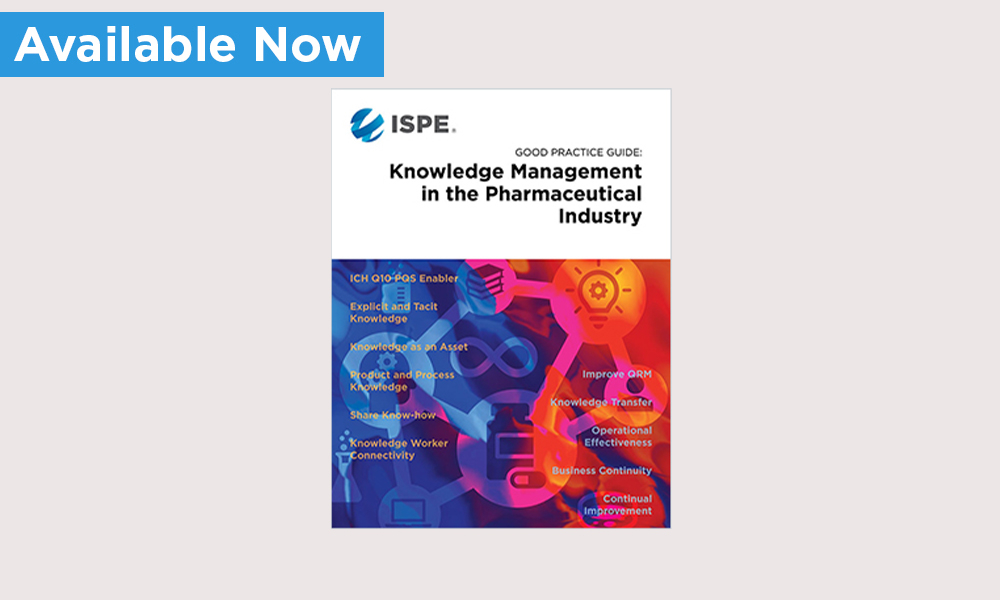
Good Practice Guide: Knowledge Management in Pharmaceutical Industry
ICH Q10 outlines three objectives: achieve product realization, establish and maintain a state of…

PE Articles
ISPE 2022 Member of the Year: Martin Lipa - An Advocate for Knowledge Management
When nominating Martin (Marty) Lipa, Executive Director, Knowledge Management, Merck & Co. Inc., for…
iSpeak Blog
Advancing Pharmaceutical Quality Cultural Excellence
Cultural Excellence is the expressed and implied ways in which an organization operates. Excellence…
iSpeak Blog
ISPE Advancing Pharmaceutical Quality Program Complete
ISPE is pleased to announce the complete Advancing Pharmaceutical Quality Program (APQ) Program is…
Product
APQ Guide: Cultural Excellence
Cultural excellence is the expressed and implied ways in which an organization operates. Excellence…
Product
APQ Guide: Process Performance & Product Quality Monitoring System (PPPQMS)
The Process Performance and Product Quality Monitoring System (PPPQMS) is a fundamental element of…
Video
Advancing Pharmaceutical Quality, Change Management
Complimentary Learning Level: Intermediate Session Length: 1.5 hour The ISPE Advancing…
Video
Life Cycle Approach to Process Validation- Stage 3 Implementation
Life Cycle Approach to Process Validation- Stage 3 Implementation Complimentary Learning Level…
Video
QRM Based Integrated C&Q Series - Engineering Change Management
QRM Based Integrated C&Q Series - Engineering Change Management Complimentary Learning Level…
PE Articles
Process Architecture and Integrated Design in the Pharmaceutical Sector
Large engineering companies specializing in the industrial production sector have increasingly been…
News
Bayer's Supply Network-Centric Approach to Digitalization
Chris Grail, Bayer Pharmaceutical's engineering and maintenance excellence lead, shared insights on…
Product
GAMP RDI Good Practice Guide: Data Integrity by Design
Published: October 2020 Pages: 176 Table of Contents Special Pricing for Emerging Economies Data…
Join the Conversation
As an ISPE member you can engage with 22 active CoPs, including new communities focused on Artificial Intelligence and Sustainability. Connect with experts and join the conversations: Become an ISPE member
ISPE members: Get more involved by volunteering.
Guidance Documents
Data Integrity (1)
+GAMP® (1)
+Knowledge Management (7)
+Lifecycle Management (1)
+Process Analytical Technology (1)
+Quality Assurance (4)
+Community Discussions
Community Discussions
Aug 11, 2025
Quality
Lifecycle Management
Validation
Aug 06, 2025
Quality Assurance
Jul 25, 2025
Data Integrity
Jul 24, 2025
Information Systems
Artificial Intelligence
Data Integrity
Jul 17, 2025
Manufacturing Operations
Oral Solid Dosage
Jul 08, 2025
Pharma 4.0™
Jun 20, 2025
Sustainable Facilities, HVAC, & Controlled Environments
Webinars
Upcoming
On-Demand
iSpeak Blog Posts




Pharmaceutical Engineering Magazine Articles

Webinar: Knowledge Management Insights and More
On 26 January 2022, representatives of the author team for the ISPE Good Practice Guide: Knowledge…

Knowledge Centers Improve Knowledge Capture and Sharing
As the industry experiences significant changes to the way we do business, knowledge capture and…

Effective Knowledge Management in Mergers and Acquisitions
As the pharmaceutical industry continues to grow and evolve, a significant contributor to innovation…

From Data to Knowledge Management: What to Consider
Although data and knowledge are both stand-alone disciplines that need to be systematically managed…

Integrating Knowledge Management and Quality Risk Management
ISPE held an Expert Xchange on 18 January 2022 entitled “Risk-Based Decision Making: Advancing the…
Process Architecture and Integrated Design in the Pharmaceutical Sector
Large engineering companies specializing in the industrial production sector have increasingly been…
ISPE 2022 Member of the Year: Martin Lipa - An Advocate for Knowledge Management
When nominating Martin (Marty) Lipa, Executive Director, Knowledge Management, Merck & Co. Inc., for…
Webinar: Knowledge Management Insights and More
On 26 January 2022, representatives of the author team for the ISPE Good Practice Guide: Knowledge…
Knowledge Centers Improve Knowledge Capture and Sharing
As the industry experiences significant changes to the way we do business, knowledge capture and…
Effective Knowledge Management in Mergers and Acquisitions
As the pharmaceutical industry continues to grow and evolve, a significant contributor to innovation…
From Data to Knowledge Management: What to Consider
Although data and knowledge are both stand-alone disciplines that need to be systematically managed…
Integrating Knowledge Management and Quality Risk Management
ISPE held an Expert Xchange on 18 January 2022 entitled “Risk-Based Decision Making: Advancing the…
Process Architecture and Integrated Design in the Pharmaceutical Sector
Large engineering companies specializing in the industrial production sector have increasingly been…
ISPE 2022 Member of the Year: Martin Lipa - An Advocate for Knowledge Management
When nominating Martin (Marty) Lipa, Executive Director, Knowledge Management, Merck & Co. Inc., for…
Webinar: Knowledge Management Insights and More
On 26 January 2022, representatives of the author team for the ISPE Good Practice Guide: Knowledge…
Knowledge Centers Improve Knowledge Capture and Sharing
As the industry experiences significant changes to the way we do business, knowledge capture and…
Effective Knowledge Management in Mergers and Acquisitions
As the pharmaceutical industry continues to grow and evolve, a significant contributor to innovation…
Videos


Professional Development Training
ISPE Hands-On Biopharmaceutical Manufacturing Facilities and Processes Training
+ISPE Hands-On Controlled Production of Drug Substance and Drug Product in Biomanufacturing
+Hands-On Aseptic Processing & Annex 1
+Quality Events
+Good Engineering Practice (GEP) Training Course
+White Papers
July / August 2025
The AI Paradox Cover: The increasing digitalization of the pharmaceutical and medical device…
May / June 2025
The ATMP Issue: In this issue, we focus on the manufacturing of advanced therapy medicinal products…
March / April 2025
A Skill Management Framework for a Pharma 4.0™ Workforce Feature: Pharma 4.0™ is driving fundamental…