Watch Mike Martin, President and CEO of ISPE, Discuss How to Prepare the Future Workforce on the Life Science Rundown Podcast
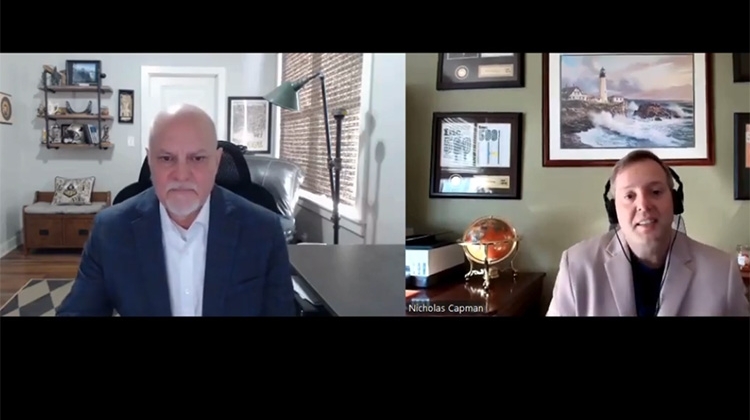
Mike Martin, President and CEO of ISPE, recently connected with Nicholas Capman, President and CEO of The FDA Group, on the Life Science Rundown, a podcast that discusses current regulatory complexities facing the life science industry and explore innovative ways to overcome those challenges.
Review Excerpts from Mike Martin’s Podcast Interview
Nicholas Capman: Hello everyone. Welcome to the Life Science Rundown. … Today I am speaking with Mike Martin. Hey, Mike. How you doing?
Mike Martin: Hey, good Nick. It's good to see you again.
Nicholas Capman: Absolutely. Appreciate you joining me on this podcast. So, before we jump into the topic, would you kindly introduce yourself?
Mike Martin: Sure. My name is Mike Martin. I'm the President and CEO for ISPE. I've been in the life science industry for nearly 40 years—30-plus years of that was spent at Eli Lilly & Company in various roles around the world, and then almost seven years in a consulting company called CAI, also doing projects around the world. This last year I've been serving as ISPE's CEO for its global organization.
Nicholas Capman: Excellent. Thank you. Today we're going to be talking about how we can prepare today's workforce to shape the future of pharma. From your vantage point as ISPE's President and CEO, what are the biggest forces reshaping the pharmaceutical industry today and how are they changing the expectations for our workforce?
Mike Martin: Nick, I think that the pharma industry is in an industrial revolution of sorts. We call it Pharma 4.0™ at ISPE. That's a term that we use. But if you look at the other industries in the world like the automotive industry, it's gone through a number of different cycles of automation. In typical terminology, when we describe for industry 4.0 or industrial revolution 4.0, it’s usually about some type of very integrated automation with smart devices and a lot of very deep control systems.
I think that’s where pharma is steering lately, in the past 5 years or so. There’s a lot of advanced robotics being applied to jobs in tasks that used to be done by operators and even more recently, a lot of AI driving some of the repetitive tasks to be done by computer or machine. And I think that’s been a big change for the industry. I think that’s going to accelerate.
I think, Nick, those types of job changes drive a different skills requirement for people that work in our industry. And I think, like across history, some roles get eliminated as that happens and new roles get created. And that means the industry has to reskill. … The idea of “pre-skilling” is out there were people are actually trying to create the skilled workforce they need before they even hire it so their influencing educational institutions to develop programs that would produce talent that they could use in their factories. I don’t think industry is going to be able to passively sit back and wait for this automation and then react to it. I think they’re going to have to go influence that, influence the skills that they need, reskill people and even pre-skill people to match that.
Nicholas Capman: If you could design the ideal pharma professional of the future, what blend of technical, digital, and leadership capabilities would they need?
Mike Martin: Yeah, I liked this question. I’ve thought about this a little bit across my career, not just in prep for a podcast question if it came up, but I’m going to tell you this background story. I had the privilege at one time of leading some super talented technical experts. This was at Lilly in one of my roles at Lilly as I was an engineering director for a manufacturing plant, and I described these folks as the engineering SEAL team. So in the U.S., that’s a special forces Navy operation if people aren’t familiar with that. But these guys and gals were just extremely knowledgeable on their areas of discipline.
I think that the ideal professional will have to have a deep knowledge of specific areas. I don’t think it will be right or ever has been right to expect any one person to be deep in everything. It’s not really possible for humans to do that given the amount of time that we live on this planet. So I think you’ll need multiple experts that are deep in parallel, adjacent, or even slightly overlapping subjects, but they need to be deep. If I was designing a genetically modified industry professional, that would be the first thing I would plug in: you need to be deep in X or Y or Z.
The second thing I would want to make sure was built in were some of these character traits. We mentioned some of those in the last question and answer, but this idea of trust. Trust is crucial. You might say, what’s that have to do with a pharmaceutical professional or a technical professional? It has everything to do with it. Whether I’m giving you a leadership answer or whether I’m giving you a technical answer, you need to trust that I know what I’m talking about, else you won’t be sure if the answer is what you’re steering for or hoping for. So I think strong character traits are something I would build in.
Then the last thing I would mention is leadership skills. And when I say leadership skills, I’m not talking just about a person that wants to be a supervisor, a director, a VP. That’s part of it. But I want technical folks that are influential in their space. They’re trusted and they have forward-thinking ideas and when they speak about the subject that they're deep in, people listen. I think that's a trait leadership skill that in the technical area is super important to have and I would design that into my ideal professional.
Nicholas Capman: What role do professional organizations like ISPE play in shaping the global talent pipeline for pharma and biotech?
Mike Martin: Yeah, so this is where probably my 40 years of experience comes into my heart. I've always considered myself to be a lifelong learner—someone that's always tried to read, study, go to another class, learn from someone else, explore something. And I think that's what ISPE is all about.
The Board of Directors for ISPE, which is comprised of volunteers from across the industry—executive-level people from the pharmaceutical industry—helped us early this year to write a new strategic vision. I'm going to recite that to you, but there are a couple of words I want to highlight.
ISPE’s strategic vision is: We’re dedicated to enhancing the quality of human life through the power of our community of life sciences professionals by sharing knowledge and igniting innovation.
The whole idea of ISPE is really based on the idea of enhancing the quality of human life. It's nice to write a guide or produce a class or a conference that people get excited about, but that's not really the product that I'm looking for—nor is ISPE. It's really about making human lives better.
ISPE has three pillars, and we've been talking about these this year, especially in Charlotte [at the 2025 ISPE Annual Meeting & Expo] when we launched this officially. The idea of knowledge and knowledge sharing is a huge pillar in the house of ISPE—where we just share the knowledge that we have in our heads with each other. Sometimes we write it down, sometimes we speak it to each other.
The idea of community—building a sense of belonging in an industry such that you've got friends everywhere: friends that help you solve problems, friends that help you deal with difficulties, and just friends that help you enjoy the work that you do.
And then innovation—providing a place for people to share ideas. Idea one plus idea two equals sometimes idea three, sometimes it equals idea five. You add things together and you get bigger changes. We do that through writing ISPE Guidance Documents and producing educational conferences, having professional development experiences, communities of practice, networking, mentoring, and on and on and on.
I think that's ISPE's role in this industry … and I think it's a great thing.
The 2026 ISPE Facilities of the Future Conference will host sessions on preparing the future workforce, including “Enhancing Student Readiness for the Pharmaceutical Workforce” and “Transforming Talent: Results of Strategic Partnerships.”