Meet Takeda Pharmaceuticals International AG: 2021 Facility of the Year Awards Winner for Facility Integration

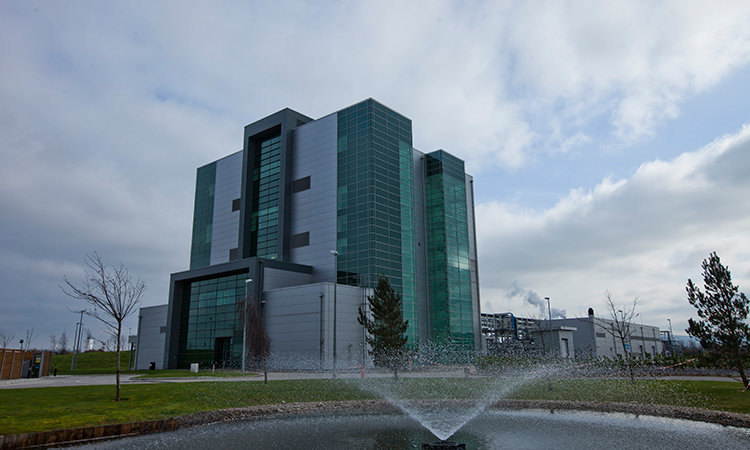
Takeda Pharmaceuticals International AG is the 2021 Facility of the Year Award Winner for Facility Integration for their Grange Castle P2 Facility in Grange Castle, Ireland.

The Facility of the Year Awards (FOYA) Facility Integration Category honors projects that exemplify the application of good design practices and superior conceptual planning, leading to excellent integration of facility and process, efficient, clean, pleasant environments, and merging of process and building to create an environment of form and functional excellence.
Project: Grange Castle P2 Facility
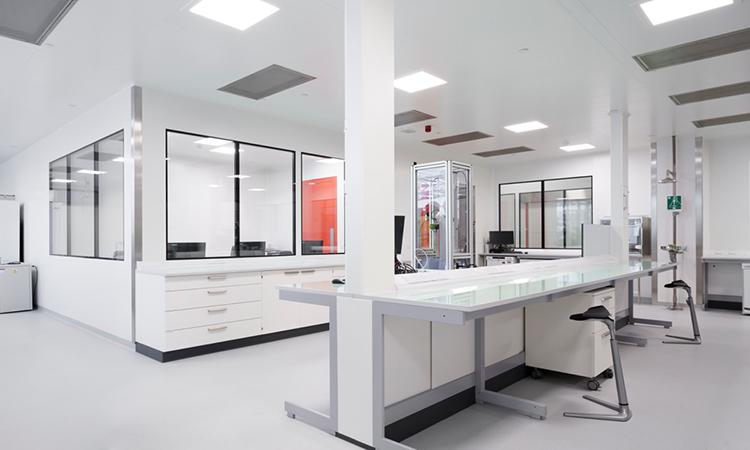
The facility includes drug substance manufacture (DS), drug product (DP) blistering and secondary packaging, QC testing, and QA operations in one dedicated building. The vision for the facility was small, simple, safe, and integrated. The project exemplifies how application of good design practices and superior conceptual planning leads to excellent integration of facility and process, yielding efficient, safe, and excellent processing outcomes.
FOYA Judges
Helping Patients Heal at Home
The oncology drug manufactured in Grange Castle is used to treat multiple myeloma in combination with other medicines. It is different from other medicines because it can be taken orally so patients do not have to go to a medical facility for injections, taking time away from their family or work.
Located at the high technology Pharmaceutical and Biotechnology Business Park in Dublin, Ireland, the Grange Castle P2 was designed as an ‘all-in-one’ facility. The entire production process from active pharmaceutical ingredients to drug product and packaging is completed under one roof. This increases the agility, flexibility, and robustness of the supply chain to ensure unconstrained availability of crucial medicines to patients worldwide.
Takeda kept the design of the new plant simple, designed everything as one unit, implemented flat management structures, and integrated teams to reduce the risk of communication issues.
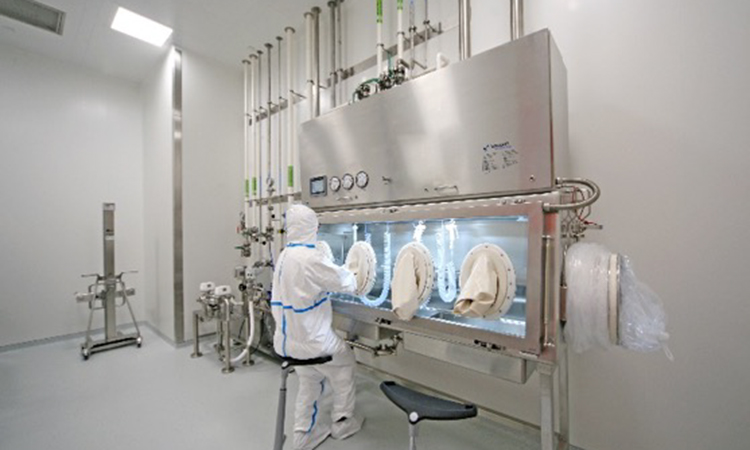
The Active Pharmaceutical Ingredients (API) used to make this oncology drug were defined to be as within occupational exposure band 5 (OEB), the second most severe rating in a 6-band occupational exposure banding system. Due to the highly potent nature of the API used to make the drug, Takeda took significant measures using the best available technology to prevent operator exposure. The design includes a permanent barrier between the operator and the material. Closed material handling and transfer is undertaken inside isolators and Restricted-Access Barrier Systems (RABS) via glove-ports. Even inside the isolator, material is not openly handled, instead RTPs and split valves are used.
Takeda choose an encapsulator because of its capacity to complete the full capsule process including capsule filling, metal detection, and weight checking. Traditionally, these processes are all done using separate machines which would require a need for separate isolators, increasing space requirements, complexity, and cost.
Innovative technology was used throughout the P2 facility. The plant will be operated completely wirelessly using a Manufacturing Execution System (MES) with equipment-integrated Electronic Batch Recording (EBR). The MES system provides data for the real time digital performance management boards which track the overall performance of the plant. Takeda is also piloting the use of wearable wrist technology for electronic signature requirements.
When operating teams have questions or need outside help, they put on a pair of augmented reality glasses for a remote expert collaboration overview. The head-mounted display uses a video camera to transmit a live image of what the user is looking at from their perspective. Unlike a simple video call, the remote participant can create spatial annotations in the view of the front-end user. This makes it easier for operators to describe their support needs and comprehend guidance. By implementing this approach, the operating team has improved their efficiency and reduced downtime.

Takeda offers virtual reality tours lead by a virtual assistant, which proved to be especially useful during the COVID-19 pandemic. Takeda is also using virtual reality training for aseptic practices. These experienced based trainings immerse trainees into simulated environments based off those in P2 and allow the trainees to receive real-time feedback about the tasks they are performing.
Takeda’s efforts have resulted in a plant that has increased efficiency, reduced labor needs, and increased the reliability of supply.
“From the beginning the vision for the facility was clear: simple, safe, and integrated,” said Gunter Baumgartner, Head of Global Engineering at Takeda. “The project delivered on all three, each adding value to the final result. However, we believe the most novel aspect was the integration of the three facilities. While this has been seen in other areas of the pharmaceutical industry, it is new to API manufacturing. The benefits have been apparent from the beginning – a single batch record system, reduced logistics and inventory, and a small environmental footprint, The project was the first of its kind, but it is unlikely that it will be the last.”
Nominate Your Facility for the 2022 FOYA Program!
Apply for a chance to join this prestigious list of innovative game-changers and let ISPE honor your organization as a 2022 FOYA program winner. Applications must be submitted by 19 November 2021.