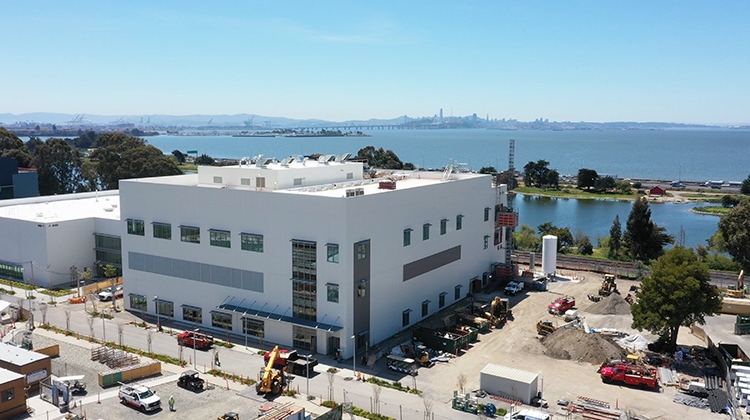
Meet the 2025 ISPE Facility of the Year Award (FOYA) Category Winner for Social Impact – Unmet Medical Needs: Bayer Healthcare LLC
ISPE
Bayer, a global leader in the pharmaceutical industry, is committed to advancing healthcare through innovative solutions. With their new Cell Therapy Launch and Manufacturing Facility, Bayer aims to provide hope to patients with unmet medical needs by finding a cure and making life-changing therapies more accessible to all. The facility signifies a major advancement in the production and commercialization of innovative cell therapies aimed at addressing critical unmet medical needs. For example, BlueRock Therapeutics, a wholly owned, independently operated subsidiary of Bayer AG, has been developing an investigational cell therapy, bemdaneprocel, which has the potential to stop or reverse the progression of Parkinson’s disease. BlueRock Therapeutics is currently differentiating stem cells into neurons, retinal photoreceptors, and cardiomyocytes. These dopamine-producing neurons could be implanted into the brain to stop or reverse Parkinson’s disease, which affects over 10 million people worldwide.
This facility is one of the first of its kind for its flexible design and is Bayer's first fully electric pharmaceutical manufacturing plant. It fosters collaboration with biotech innovators, academia, and automation suppliers to expedite the development of transformative therapies.
The Cell Therapy Facility is designed to serve as a bridge between development and commercial manufacturing. Its purpose is to make extraordinary therapies ordinary, by addressing three areas of unmet needs: patients, platform, and capacity. First and foremost, it enables therapies to be manufactured and delivered to treat patients with unmedical needs. Second, there is an unmet industry need for a platform to develop allogeneic cell therapies. This facility's equipment provides a platform that additional allogeneic cell therapies can be developed around. Third, as the first commercial allogeneic cell therapies are in the approval process, there is an unmet need for allogeneic cell therapy manufacturing capacity, that this facility delivers.
The 100,000-square-foot facility is designed for late-stage clinical manufacturing and commercial launches of cell therapies, creating readiness for first production runs. The facility features flexible, modular space for cell culture, viral transduction, and automated filling, leveraging Bayer's expertise in regenerative medicines.
The facility includes:
Manufacturing Suites: Cleanroom spaces covering 30,000 square feet dedicated to advancing cell therapy production, designed for National Institutes of Health Biosafety in Microbiological and Biomedical Laboratories guidelines Biosafety Level 2 containment, providing a compliant environment for the products. Bayer utilizes concurrent multi-product manufacturing and viral or non-viral gene editing technologies to enhance cell functionality, and the facility is outfitted with cutting-edge, innovatively designed and engineered equipment that guarantees unparalleled precision and efficiency.
Large-Scale Automated Allogeneic Cell Therapy Process: These processes put Bayer at the forefront of large-scale allogeneic cell therapies specifically designed to treat Parkinson's disease, and pioneering cell manipulation, automated liquid handling systems, and leveraging single use materials. By leveraging customized equipment, technological innovation, and a cutting-edge process, Bayer is establishing itself as a leader in the rapidly evolving field of regenerative medicine.
Master Cell Bank: Created from the starting allogeneic stem cell material, the cell bank is homogeneous and thoroughly tested and characterized, enabling safe and consistent manufacturing. Bayer’s intent is to produce large numbers of cells economically to make therapies accessible to patients. Bayer seeks to partner with other companies to produce allogeneic cell therapies for other regenerative medicine or oncology indications.
Bayer’s Cell Therapy Launch and Manufacturing Facility represents a significant advancement in the production of allogeneic cell therapies, aimed at delivering high-quality, consistent treatments. In addition to its innovative therapeutic contributions, the facility offers opportunities for employees to develop skills, empowering aspiring biotech professionals.
For these reasons, Bayer’s Cell Therapy Launch and Manufacturing Facility is recognized as the 2025 ISPE FOYA Category Winner for Social Impact – Unmet Medical Needs.
About the Social Impact Category
Winners in this category exemplify application of novel approaches, standards and practices which result in efficient processing, resourceful utilities and business advantage by: Accelerating a shift to sustainable facility design, intended to ensure the effective use of energy, minimize waste, reduce carbon footprint, incorporate green manufacturing techniques, and reduce environmental impact or increasing patient access and preventing drug shortages through in-country-for-country manufacturing; outbreak, epidemic, or emerging health crisis response via rapid deployment and fast- track drug production; and designs which overcome specific geographical challenges.
Established in 2005, the FOYA program recognizes state-of-the-art projects utilizing new, innovative technologies to improve the quality of products, reduce the cost of producing high-quality medicines, and demonstrate advances in project delivery. The FOYA program provides a platform for the pharmaceutical science and manufacturing industry to showcase its accomplishments in facility design, construction, and operation, while sharing the development of new applications of technology and cutting-edge approaches.
ISPE delivers technical and operational solutions to support across the global pharmaceutical and biopharmaceutical industry in the manufacture of quality medicines for patients.
As a pharmaceutical process transitions from early commercial launch into mature continued process verification (Stage 3b CPV), the primary goal is to maintain a predictable state of control. During this stage, manufacturers rely heavily on statistical process control (SPC) and run rules to detect process drift.
The 2026 ISPE Facilities of the Future Conference, held this past February in San Diego, CA, USA, was marked by a high level of energy, openness, and thoughtful engagement. Global experts, regulators, academics, students and recent graduates, and industry professionals were actively engaging with each other, from technical discussions and hallway conversations to shared meals and impromptu...
In regulated pharmaceutical and life sciences environments, audit readiness has long been a defining measure of quality maturity. Organizations invest significant effort in preparing for inspections by reviewing records, validating documentation, and ensuring that systems align with regulatory expectations. However, as digital transformation reshapes quality operations and regulatory expectations...