Facility of the Year Awards Marks 20th Anniversary Honors Global Innovation in Pharma Manufacturing

The 2025 Facility of the Year Awards (FOYA) category winners were announced in May at the ISPE Europe Annual Conference held in London, England. As FOYA celebrates its 20th anniversary this year, it honors 17 finalists whose projects span 12 countries and five continents—a true global showcase of innovation.
Category winners included Touchlight (Innovation), Johnson & Johnson Innovative Medicine–Italy (Operations-Operational Excellence), Johnson & Johnson Innovative Medicine–Ireland (Operations-Project Execution), CSL Behring (Pharma 4.0™), Bayer Healthcare LLC (Social Impact-Unmet Medical Needs), Sanofi (Social Impact-Sustainability Excellence), Erbe Elektromedizin GmbH (Honorable Mention), and United Therapeutics (Honorable Mention).
But the heart of FOYA lies not just in its winners—it’s in the 17 groundbreaking finalists. The projects span a wide range of applications, including biotechnology, cell and gene therapies, fill-and-finish packaging, medical devices, and emerging technologies.
Finalists were chosen for excellence in facility design, construction, and operations, setting new benchmarks for pharmaceutical manufacturing of the future. The FOYA judging committee, composed of industry experts, evaluated submissions based on creativity, technical achievement, and potential industry impact.
“What makes FOYA so inspiring is that it’s not just about impressive buildings. It’s about visionary ideas brought to life through smart design, cutting-edge technology, and operational excellence. The winners truly set the bar for what pharmaceutical facilities can and should be,” said Mike Martin, President and CEO of ISPE and the ISPE Foundation.
The journey continues as all eyes now turn to the 2025 FOYA Banquet and Awards Celebration on 26 October at the ISPE Annual Meeting & Expo in Charlotte, North Carolina, US, where the achievements of Category Winners will be formally recognized and the Overall Winner will be revealed.
 Amgen
Amgen
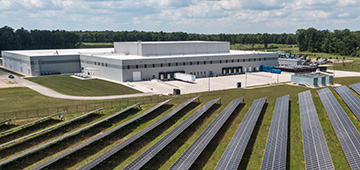
Location: New Albany, Ohio, USA
Project: Amgen Ohio (AOH)
Some of Amgen’s most advanced and sought-after medicines—including autoinjectors, syringes, and vials—are assembled, labeled, and packaged at the new 293,000-square-foot Amgen facility in Ohio. The facility was fully approved and operational in just 26 months to ensure that patients continued receiving life-saving and life-enhancing therapies without disruption. Today, the Amgen Ohio facility is the company’s most digitally advanced assembly and packaging facility. Meeting business goals within safety and compliance guardrails led the team to explore a level of technological integration and automation rarely seen in the pharmaceutical industry, tightly connecting over 30 different systems to work together seamlessly.
Bayer Healthcare LLC
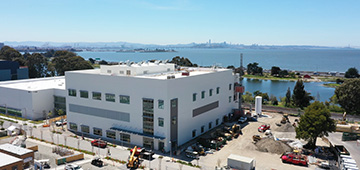
Location: Berkeley, California, USA
Project: Cell Therapy Launch and Manufacturing Facility
The Bayer Cell Therapy Launch and Manufacturing Facility signifies a major advancement in the production of commercialization of innovative cell therapies aimed at addressing critical unmet medical needs. The 100,000-square-foot facility is one of the first of its kind in the biotechnology industry and is designed to enhance Bayer’s capabilities in the rapidly evolving field of regenerative medicine, enabling the delivery of high-quality therapies to patients on a global scale.
BioNTech SE
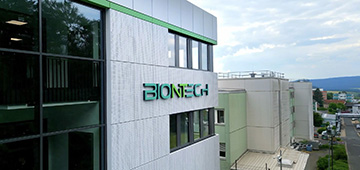
Location: Marburg, Germany
Project: BioNTainer
During a global health crisis, there can be an urgent need for worldwide vaccine access; but often, regions with fewer resources or less technology get left behind. Through their development of BioNTainer units, the BioNTech team aims to contribute to the equitable distribution of mRNA-based medicines, such as vaccines. The BioNTainer concept is a novel container-based approach to manufacturing, offering modular design, standardized equipment, and IT components. Infrastructure for the BioNTainer units can be built simultaneously, saving precious construction time. This strategy allows for rapid setup of a fully functional mRNA manufacturing facility at a selected site worldwide.
CSL Behring
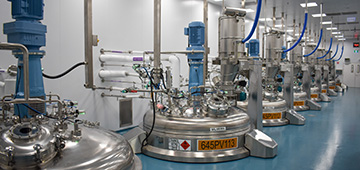
Location: Broadmeadows, Victoria, Australia
Project: Project Aurora - Facility F Base Fractionation
The largest facility of its kind within the CSL network and globally, Project Aurora is a new AU $900 million Plasma Base Fractionation Facility (Facility F). It boosts CSL Broadmeadows’ plasma processing capacity nine-fold, reaching over 10 million plasma equivalent liters per year. The facility produces intermediates for immunoglobulin, albumin, and hemophilia products, which are vital for the global patient community. These products meet the growing global demand for plasma-based therapies, essential for treating conditions such as immunodeficiencies, neurological disorders, and burns. They are used by patients and healthcare professionals worldwide, including transplant, surgical, and cancer patients.
Erbe Elektromedizin GmbH
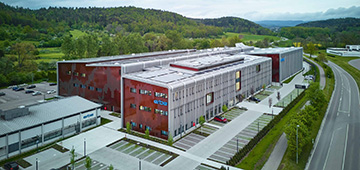
Location: Rangendingen, Germany
Project: Erbe 4.i
Erbe Elektromedizin GmbH specializes in the development and production of advanced surgical systems with a focus on the development of medical instruments and equipment for minimally invasive surgeries. Erbe 4.i is the centralized hub for instrument development and certified manufacturing and a global high precision instruments training center. The production facility includes a 25,000 m² building complex that integrates production with 2,40 0m² cleanroom, logistics, development, and administration. This facility is one of the first industrial buildings in Germany to achieve the KfW-40 efficiency house standard, setting new environmental benchmarks for the entire industry.
F. Hoffmann-LaRoche AG
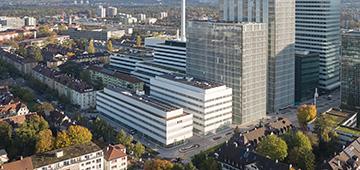
Location: Basel, Switzerland
Project: pRED Innovation Center
The pRED Innovation Center located at the Roche headquarters in Basel, Switzerland, is a state-of-the-art research center dedicated to the discovery and development of groundbreaking drugs. It replaces aging research and development buildings that could no longer be adapted to the latest developments in technology and science. The need to renew this infrastructure gave Roche the opportunity to set new standards. With the investment of around 1.2 billion Swiss francs, an infrastructure has been created that offers scientists a landmark environment for their important work. Going from 17 outdated buildings to one modern lab and office facility with a total of 42 flexible and configurable floors, the approach to design the pRED Center was based on the evaluation of more than 30 leading research institutes and sites worldwide.
Grünenthal
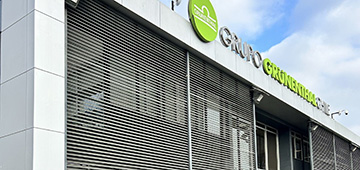
Location: Penalolen, Chile
Project: Master Program LatAm Kairos
Grünenthal is a pharmaceutical production facility where hormonal products are produced and is a key supplier of medicines for the public health service in Chile. The Kairos Project delivered a state-of-the-art solids plant, which included areas from dispensing to secondary packaging using advanced technology to ensure an efficient and state-of-the-art production facility. The plant had to be revamped during ongoing production, which required exact time planning to not disrupt ongoing production and supply of medicines to patients.
Johnson & Johnson Innovative Medicine
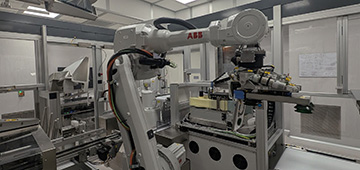
Location: Latina, Italy
Project: Flexible Bottle Packaging Line
Johnson & Johnson manufactures and packages solid products spanning multiple therapeutic areas including oncology, immunology, neuroscience, infectiology, and cardiopulmonary at their Latina, Italy, site. Over the past few years, the demand for small and medium-sized batches (portion below 3,000 units) has increased by almost 70%. Their innovative project implemented a new flexible packaging line and an optimized organizational model which successfully shortened changeover from six hours to a mere 45 minutes, significantly enhancing efficiency.
Johnson & Johnson Innovative Medicine
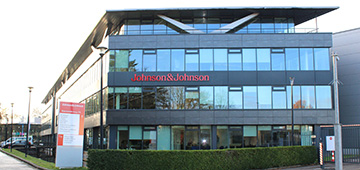
Location: Sassenheim, The Netherlands
Project: Pollux
Johnson & Johnson’s site in Leiden includes biopharmaceutical production facilities that produce clinical and commercial bulk active pharmaceutical ingredient (API) monoclonal antibodies using fed-batch and continuous perfusion cell culture processes followed by various purification steps, research and development operations, and analytical testing services, including stability and release testing for their global portfolio of large molecule products and vaccines. Pollux was designed to be a Centre of Expertise on lentiviral vectors (LVV). The project scope encompasses a manufacturing facility in Sassenheim to produce LVV and is designated as the future commercial manufacturing site for LVV to support Johnson & Johnson’s global CAR T cell supply chain.
Johnson & Johnson Innovative Medicine
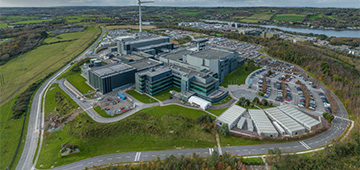
Location: Ringaskiddy, Cork, Ireland
Project: BioCork 3.2 Expansion Project
Expanding the BioCork 3.2 facility enables Johnson & Johnson to pursue innovative solutions to advance how medicines are manufactured to treat and prevent some of the world’s most devastating and complex diseases. The expansion of the existing manufacturing facility in Cork, Ireland, incorporates additional capacity in large-scale fed-batch technology, which will guarantee efficient and sustainable delivery of biologic medicines in the areas of immunology and oncology. It increases the existing manufacturing capacity by 80% and provides full-time employment for an additional 180 people.
Kindeva Drug Delivery
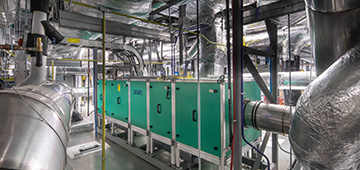
Location: Bridgeton, Missouri, USA
Project: Kindeva Bridgeton
(CDMO) for sterile injectable, pulmonary, nasal, transdermal, and intradermal finished dose. This modular, expandable approximately 200,000-square-foot facility makes Kindeva one of only a few CDMOs in the world capable of servicing sterile fill, device manufacture, and final assembly in one geographic location. It’s also fully Annex 1 compliant with an initial annual capacity to fill greater than 100 million units of vials, cartridges, and syringes of a range of sizes. The rapid execution of this fill-finish facility, combined with Kindeva’s strategic focus on future expansion, helps address the soaring demand for sterile filling capacity in the industry.
Nitto Denko Avecia
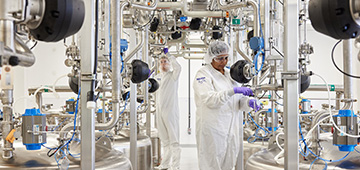
Location: Milford, Massachusetts, USA
Project: Project M5
Nitto Denko Avecia is a contract developer and manufacturer of oligonucleotide products. The two-story 92,000-square-foot plant was built to manufacture a diverse blend of products for both clinical and commercial needs, and for wide-scale capability from multi-kilogram to metric tons per year of individual products within the same equipment. This project is part of a wider plan that expands the site into a three-property campus to provide full oligonucleotide services from clinical development to commercial manufacturing.
Oncomed Manufacturing A.S.
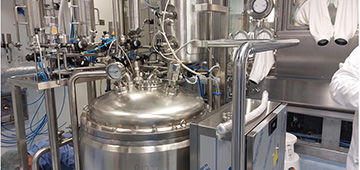
Location: Brno, Czech Republic
Project: Syringe Line 3 Installation and Facility Modernization
Oncomed Manufacturing A.S. is a CDMO specializing in aseptic processing of oncology injectables in clinical and commercial scales. The company delivers drugs with high potent and cytotoxic characteristics used to fight cancer. The production focuses both on small molecules (so-called end-to-end solution) and more innovative drugs based on biomolecules (fill-and-finish service), such as antibody–drug conjugates, human-virus protein interactions (HPAPI) proteins, monoclonal antibodies (mAbs), and oligonucleotides. Their new state-of-the-art technology comprises two production commercial lines dedicated to the manufacture of oncology vial injectables and one syringe line.
Sanofi
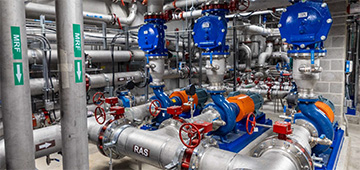
Location: Toronto, Ontario, Canada
Project: Building 99 - Wastewater Treatment and Recovery Plant (WWTRP)
Sanofi Toronto manufactures and distributes up to 100 million pediatric and adult vaccines and other pharmaceutical products a year. The Wastewater Treatment and Recovery Plant (WWTRP) at the facility has been equipped with state-of-the-art technologies and advanced engineering solutions to implement innovative solutions to treat and reuse wastewater on-site, addressing global water scarcity challenges and providing an example of how pharmaceutical manufacturing can align with the principles of green chemistry and circular economy. This project not only supports Sanofi’s internal needs but also contributes to reducing the environmental footprint of pharmaceutical production, while helping create local economic opportunities and ensure reliable essential human vaccine production.
Takeda Pharmaceutical Company Limited
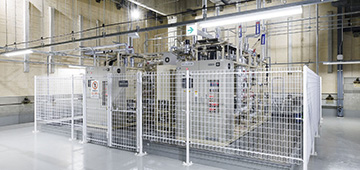
Location: Tokyo, Japan
Project: Enoshima Light House
Takeda’s facility manufactures Chinese hamster ovary cell–based biologic drug substances for early-phase clinical trial materials, focusing on cell culture and purification processes. This innovative facility features a fully single-use process that eliminates cross-contamination during early-stage development of products having limited toxicity data and also offers the option of partial continuous processing. The facility combines rigorous GMP management with collaboration between research and chemistry, manufacturing, and controls functions. The facility is designed for flexibility in development scheduling to enable first-in-human trials, which can lead to more timely availability of innovative treatments for patients, ultimately improving patient outcomes and healthcare.
Touchlight
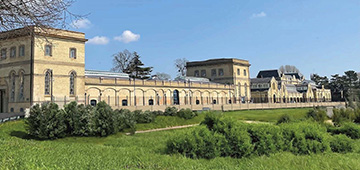
Location: Hampton, London, UK
Project: Development and Manufacture of Novel Synthetic DNA to Enable the Future of Genetic Medicines
Touchlight’s proprietary unique doggybone DNA (dbDNA™) is a fully synthetic, linear DNA vector produced enzymatically. The process leverages rolling circle amplification powered by enzymes to rapidly synthesize large quantities of DNA. dbDNA production eliminates the need for fermentation, antibiotic resistance sequences, or plasmid extraction, drastically reducing timelines and simplifying manufacturing, achieving higher purity and greater sequence flexibility, and enabling the rapid production of DNA at scales suited for genetic medicines. Touchlight’s operations are located in the historic waterworks buildings in Hampton, London. With this expansion, they can triple production capacity, over 8 kg of dbDNA annually, which exceeds current global plasmid DNA demand, making it one of the world’s largest DNA manufacturing facilities.
United Therapeutics
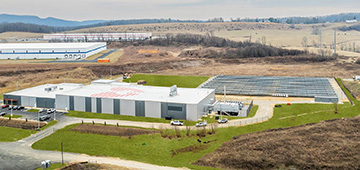
Location: Christiansburg, Virginia, USA
Project: Clinical Xenotransplantation DPF Facility
To revolutionize organ transplantation and overcome the critical shortage of human organs, United Therapeutics (UT) initiated the Clinical Xenotransplantation DPF Facility project. Their work to manufacture organ alternatives with human cells has yielded a variety of approaches including xenotransplantation, sourcing transplantable organs from other animals. No facilities existed to support the first in-human clinical trials in xenotransplantation. So, UT built the first, with a total design and construction timeline of 31 months. UT has developed a clinical scale designated pathogen-free (DPF) facility to produce tolerable, transplantable organs for patients with end-stage organ disease.
About the ISPE Facility of the Year Awards Program
Established in 2005, the Facility of the Year Awards (FOYA) recognize state-of-the-art projects utilizing new, innovative technologies to improve the quality of products, reduce the cost of producing high-quality medicines, and demonstrate advances in project delivery. The FOYA program provides a platform for the pharmaceutical science and manufacturing industry to showcase its accomplishments in facility design, construction, and operation, while sharing the development of new applications of technology and cutting-edge approaches. Visit ISPE.org/FOYA for more information.