Guides

Guides offer practical advice on regulatory initiatives by providing effective, cost-efficient approaches and encouraging innovation and technological advances while achieving regulatory compliance. They typically focus on the “what”, but may also provide some information on implementation.

-

The ISPE Guide: ATMPs – Validation Methods and Controls Throughout the Cell and Gene Therapy Product Lifecycle provides an in-depth analysis of validation activities, including analytical methods, equipment, processes, cleaning, and supply chain. It covers how to identify, assess, and mitigate risks unique to ATMPs, enabling implementation of risk-based validation strategies.

-

This ISPE Sustainability Guide is a foundational document that presents key principles and concepts to reinforce sustainable practices in the pharmaceutical industry, based on global and local guides, including existing regulations. Although intended for Small and Medium Sized Entreprises (SME) at the start of their sustainability journey, larger organizations may also use this Guide to support their sustainability strategy.

-

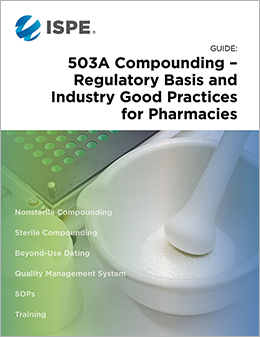
The ISPE Guide: 503A Compounding – Regulatory Basis and Industry Good Practices for Pharmacies provides an overview of FDA regulations and guidance necessary for conducting safe compounding to help pharmacies understand the requirements of FD&C Act Section 503A. In addition, the ISPE Guide outlines the authority of State Boards of Pharmacy and their coordination of oversight with the FDA.

-

This Guide focuses primarily on allogeneic cell therapies, specifically manufacturing facility development and design. Allogeneic cell therapies have unique challenges due to the small manufacturing scale, limitations in scale-up, the need to manufacture multiple lots of products concurrently, and the need for flexibility to accommodate a varied and evolving product portfolio. This Guide covers common challenges with allogeneic cell therapy facilities, design concepts specific to allogeneic cell therapy facilities, and GMP layout and architectural design development. Key aspects of the allogeneic cell therapy manufacturing process, including sampling, QC, and process understanding, are presented.

-

The ISPE Guide: ATMPs - Recombinant AAV Comparability and Lifecycle Management considers requirements and guidance for recombinant Adeno-Associated Virus (rAAV) manufacturing and comparability from the US FDA, EU EudraLex Volume 4 Part IV, EMA Q&A, and ICH Q5E. Drawing on a team of industry experts with global experience, the Guide provides current understanding and best practices on rAAV comparability exercises, offering manufacturers a standardized approach for developing process and product comparability strategies. It provides considerations for evaluating rAAV vector products comparability pre and post-change to the manufacturing process and proposes strategies to address the unique challenges posed by this new class of products.

-

The ISPE Guide: 503B Compounding – Regulatory Basis and Industry Good Practices for Outsourcing Facilities aims to help facilities understand the FD&C Act Section 503B requirements. This ISPE Guide combines FDA regulations and recommendations with pharmaceutical industry standards, providing a go-to document for any size 503B facility. The compounding process is covered, from the importance of CGMPs to establishing a Quality system (including qualifying suppliers and vendors), receipt of raw materials/active ingredients, and shipping of the finished drug product.

-

Advanced Therapy Medicinal Product (ATMP) therapies include cells, engineered tissues, or the manipulation of the patient’s genome. This is in contrast with traditional manufacturing processes for compounds that are synthetically derived (i.e., small molecule) or proteins or peptides expressed by cellular systems (i.e., large molecule biopharmaceuticals). ATMPs are based on genes, cells, or tissues delivered to patients to provide a therapeutic benefit based on a specific target of interest.
-

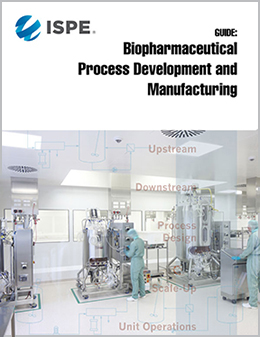
The ISPE Guide: Biopharmaceutical Process Development and Manufacturing focuses on the development and the process approaches and practices involved in providing cost effective, regulated manufacturing of biopharmaceutical products in a timely manner that meet their intended use.

-

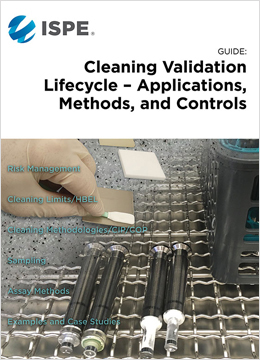
This guide provides a hands-on approach to support the life science industry in the development and establishment of compliant cleaning programs that meet or exceed regulatory expectations.