

Sterile Product Manufacturing Facilities: Applying the ISPE Baseline® Guide and FDA Guidance Principles to Design and Operation (T12)
Overview
This course uses the second edition of the ISPE Baseline® Guide: Sterile Product Manufacturing Facilities and the FDA's Guidance for Industry: Sterile Drug Products Produced by Aseptic Processing - Current Good Manufacturing Practice to provide an understanding of the key requirements and GMPs for sterile manufacturing facilities. The Guide provides valuable information on design, while the USFDA's Guidance helps professionals understand the regulatory context and expectations for sterile drug manufacturing.
Resources and Activities
- Pre-Course Work Materials
- Interactive Exercises
- Learning Assessments
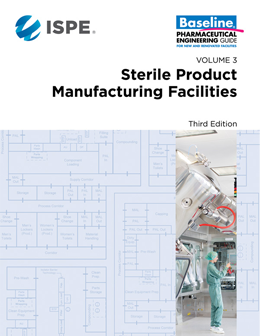
- ISPE Baseline® Guide: Sterile Product Manufacturing Facilities (Third Edition)
Course Modules
- Introduction to the Baseline Guide
- Concepts and Regulatory Philosophy
- Process and Equipment Considerations
- Architecture and Layout
- Environmental Control Requirements
- HVAC Systems
- Control & Instrumentation
- Commissioning and Qualification
- Barrier-Isolator Technology
- Exercises
- Supplemental Materials
Who Should Attend
- Engineers, validation scientists, quality assurance specialists, and manufacturing managers
- Professionals who want a fundamental understanding of sterile manufacturing facilities and their design, renovation, and operation
- Engineering firm professionals and other consultants who work with the pharmaceutical industr
NOTE: Participants interested in commissioning and qualification should attend theScience and Risk-based Commissioning and Qualification - Applying the ISPE Good Practice Guide: Applied Risk Management for Commissioning and Qualification training course.
Additional Course Details
Using the referenced documents, this course will cover regulatory philosophy, aseptic process and equipment considerations, aseptic clean room design and operation, differential pressure requirements, airlocks, air filtration, HVAC design considerations, and a brief introduction to barrier isolation technology. (Note: parts of Guidance for Industry: Sterile Drug Products Produced by Aseptic Processing - Current Good Manufacturing Practice that do not focus on facilities and equipment will not be discussed in detail.)
In addition, the course will include an exercise in the layout of an aseptic filling facility. In many cases, when a new facility is required within an existing or new building, the designer will begin by sketching a floor plan. This exercise will demonstrate how to use process flow diagrams and an accommodation schedule to thoroughly define facility requirements before advancing to the floor plan layout stage.
Learning Objectives:
- Understand the regulatory impact on design, construction, and the regulatory context and expectations for sterile drug manufacturing including the use of RABS and isolator systems
- Identify sources of contamination in aseptic operations
- Explain methods for contamination control
- Describe the major requirements for design, renovation, and operation of a sterile manufacturing facility
- Discuss the fundamentals of aseptic clean room design
- Understand the importance of monitoring critical parameters: temperature, humidity, air velocity, differential pressure, airflow patterns, non-viable particle counts, and microbial counts
- Design a systematic process for aseptic facility layout
- Apply ISO 14644-1:2015, Clean Rooms and Associated Controlled Environments - Part 1: Classification of Air Cleanliness to pharmaceutical manufacturing facilities, and the relationship with the GMP requirements
- Distinguish between the 2004 and 1987 versions of the FDA's Guidance for Industry, Sterile Drug Products Produced by Aseptic Processing - Current Good Manufacturing Practice as applied to the design, operation, maintenance, and modification of facilities
Community of Practice (COP)
This training course is of particular interest to existing and future members of the ISPE Sterile Products Processing (COP).