Best Practices for Bioreactor Contamination Investigations

Bioreactor contamination can be one of the most troublesome and costly deviations to resolve in a GMP manufacturing facility. That’s both because cell culture unit operations are inherently susceptible to contamination and because tracking down the source of contamination can be extremely difficult.
This article will propose a best-practice approach—based on the author’s experience with numerous contamination investigations over the past three decades—for investigating contamination and summarize some of the most common equipment-related causes, focusing on contamination by adventitious agents such as bacteria, molds, yeasts, viruses, and mycoplasma.
Background
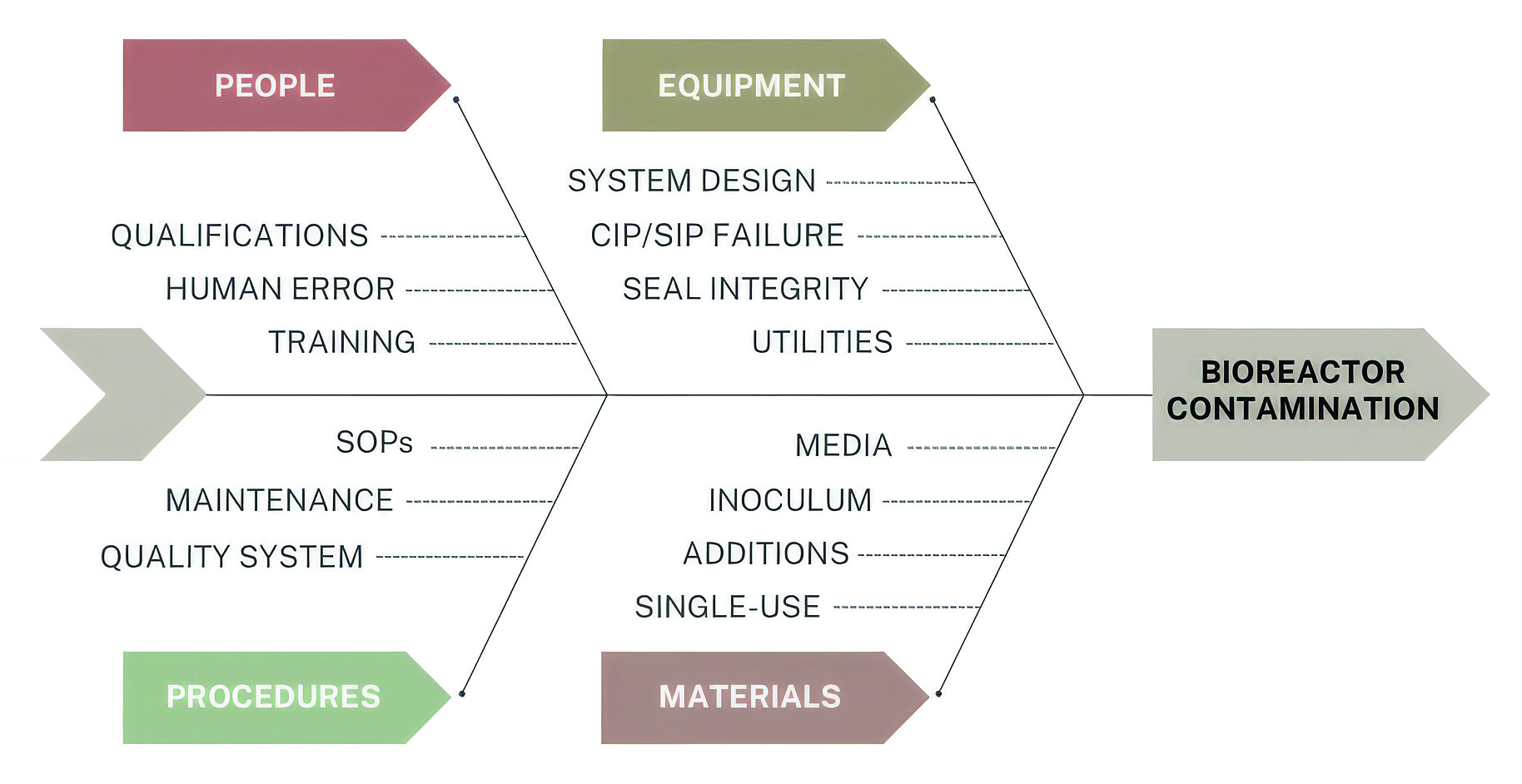
Bioreactor contamination may result from one or more failures of people, procedures, materials, or equipment (see Figure 1). Contamination events may be intermittent. They may result from multiple root causes or a combination of causal events. Unless organizations can isolate the root cause and remediate it quickly, serial contamination events can disrupt manufacturing operations for extended periods.
Figure 1: Fishbone diagram showing general categories for potential sources of bioreactor contamination.
Typically, losing a production batch because of contamination will pressure operations managers to quickly replace that batch. It may be tempting to initiate an equipment changeover (e.g., clean-in-place [CIP], steam-in-place [SIP], media addition) to prepare the bioreactor for a replacement batch before the investigation starts. This is where advance planning for a contamination contingency provides value; it mandates a response that prioritizes access to inspect the equipment before changeover and captures critical information supporting the investigation while the contaminated batch’s processing details, including manual manipulations, are still fresh in operators’ minds. A post-contamination equipment inspection is important because the bioreactor condition and setup may provide clues about the contamination’s source and therefore should be examined before the equipment state is altered.
An immediate operator interview is important because it can capture observations before conversation distorts anyone’s perspective. Completing the interview promptly will also be more likely to capture observations that may seem unrelated at the time but could help direct the investigation or corroborate a contamination thesis. When interviewing personnel, it’s important to establish a nonjudgmental environment conducive to honest reporting. Operators should be encouraged to volunteer observations or admit errors that may be associated with the incident. Both the investigative team and operations management should focus on fixing the problem, not affixing the blame.
Investigation Approach
Contamination investigation requires a structured approach to capture data that can be analyzed to discern patterns and correlations and to identify potential root causes. This necessitates a standard procedure for responding to contamination events to ensure that critical information associated with the contamination is documented to support the investigation and future corrective and preventive action (CAPA) conclusions.
The systematic analysis required for contamination investigations is analogous to the scientific methods used for solving crimes. Evidence must be collected, cataloged, and systematically analyzed to reconstruct events leading up to the contamination. In that sense, the detective work in contamination investigations is essentially forensic. If personnel are not interviewed and the equipment is not examined immediately after an event, the evidence necessary to assign a root cause may be destroyed. Procedural controls should be established to ensure that personnel respond appropriately, and that time-sensitive information is systematically captured and documented.
It’s also helpful to remember that contamination investigations resemble risk assessments in that they identify causal probabilities. It’s very rare that a cause of contamination can be identified with conclusive evidence. Many equipment-related causes of contamination simply compromise the effectiveness of processes designed to create and maintain an axenic culture environment, thereby lowering the probability that adventitious agents are excluded from the process zone. This is why contaminations resulting from equipment flaws are frequently intermittent. In most cases, multiple potential causes are identified, resulting in CAPA to improve the robustness of the process without absolute certainty that the proximate cause of contamination has been addressed.
Investigation Scope
A contamination investigation procedure should address the following topics:
- Scope and responsibilities for cross-functional investigation team and supporting interested parties
- Procedure for collecting relevant batch data and electronic records; maintenance records and prior CAPA records associated with the contaminated equipment should also be assembled, along with any relevant data from environmental monitoring, plant utilities, and building automation system records
- Methods for identifying the contaminating microbial adventitious agent and time of contamination (typically derived from batch records and testing sample retains)
- Requirements for contaminated equipment isolation to prevent cross-contamination with other systems
- Standard practice for contaminated culture inactivation and disposal
- Procedure for equipment disassembly and examination for evidence of failed components, inadequate cleaning, or compromised process zone integrity
- Standard procedure to interview operators and document any atypical events associated with the incident
- Standards for post-contamination bioreactor cleaning and return to service
Deviations from the usual growth profile, such as an unusual change in pH or dissolved oxygen demand, provide clues to determine the approximate batch age when contamination occurred.
Historical Data Analysis
One of the most useful tools in tracking down microbial contaminations is the analysis of historical data from the contaminated batch. This data may be used to compile a timeline of operations and events leading up to the contamination. Deviations from the usual growth profile, such as an unusual change in pH or dissolved oxygen demand, provide clues to determine the approximate batch age when contamination occurred. It’s also helpful to compare data profiles for automated procedures such as CIP and SIP operations with data profiles that were established when the equipment was first qualified. Trend deviations provide clues that are useful for diagnosing mechanical failures that may have contributed to the contamination.
A primary database of all contamination events should be maintained to record the date, equipment identity, batch number, contaminating organism, batch age at detection, and ultimately the assigned cause and CAPA actions. This will facilitate a comparison between the most recent contamination and prior contaminations at the site to identify correlations in equipment identity, contaminating organism, or a particular step in the manufacturing process. This analysis can help narrow the investigation’s scope by looking for patterns in the data to identify likely sources of contamination.
Contaminant Detection and Identification
Identifying the contaminant species is an essential part of the investigation and provides clues that can further narrow the investigation’s scope. Bacterial and fungal contaminations are relatively easy to detect from monitoring the culture’s critical process parameters, whereas mycoplasma and viral infections may require specialized analytical assays to detect. Contaminant growth characteristics may be used with batch trends and retain sampling to determine the likely time frame when the contamination occurred1. Gram-positive spore-forming bacteria are more likely to have originated from aeration or sterilization failures, whereas water-borne gram-negative species are more likely to have aqueous contamination sources2.
Defining the Process Zone
The equipment investigation scope is further narrowed by establishing the process zone for the contaminated culture. Because bioreactors are closed systems, the process zone includes all equipment and components that may contact the process or product. This would encompass what is often referred to as the bioreactor’s sterile boundary—the equipment components that separate the culture from the surrounding environment (e.g., interior surfaces of the bioreactor vessel or bag, product-contact piping or tubing, isolation valves, static and dynamic seals, and sterile filters). The process zone may also extend to process equipment connected to the bioreactor skid during operation, such as media filtration stations, perfusion devices, process transfer lines, and containers for buffer, media, inoculum, and chemical additions. A general discussion on the process zone and contamination control is in the ISPE Baseline® Guide: Biopharmaceutical Manufacturing Facilities3.
The investigation scope should examine the integrity of the process zone and the effectiveness of process operations that render the process zone free of adventitious agents. In a single-use bioreactor (SUB), this would focus on the gamma irradiation of disposable assemblies by their manufacturer. In multiuse stainless steel bioreactors, the focus will be on processes designed for cleaning and sterilizing the process zone.
Single-Use Bioreactors
Adopting SUB technology for all product-contact surfaces eliminates the need for equipment cleaning and essentially outsources process zone sterilization. SUBs simplify the investigation, but do not completely eliminate the scope of inquiry for the equipment. Because of the SUB bag’s translucent characteristics, visual observations of unusual turbidity or foaming may help detect contamination detection and determining the batch age when it was contaminated. The process zone in a SUB consists entirely of disposable assemblies (e.g., the bioreactor bag, mixer, sensors, tubes, sterile connectors, addition port assemblies), so that will be the investigation’s focus. It is imperative to observe and document the condition of the bioreactor’s single-use assembly to note leaks or unusual material buildup.
The American Society of Mechanical Engineers (ASME) Bioprocessing Equipment (BPE) standard for bioprocessing equipment provides guidance for single-use component shelf life, storage, and expiration date4. Each single-use assembly should be investigated to confirm that usage conformed to the expiration date, storage requirements, and any special handling requirements provided by the manufacturer. The investigation should include a review of storage and shipping conditions (e.g., temperature or light exposure) of the SUB disposable assemblies. The batch record should also be examined to confirm that the operating conditions were below the rated maximum temperature, pressure, and operating volume limits for the SUB’s single-use components. If this information is not available from the vendor, your organization should consider future sourcing from a BPE-compliant supplier.
SUB contaminations may result from several failure mechanisms. The most common failures are associated with a breach of container integrity, which can go undetected until the bioreactor bag is filled and begins to leak. Single-use components may be damaged during warehouse storage, movement to the manufacturing suite, or physical setup by the operator. In production-scale single-use systems, the vendor typically provides a special apparatus and protocol to install and inflate the bioreactor bag without damaging it. The ISPE Good Practice Guide: Single-Use Technology lists container closure integrity test methods that may be used to verify system integrity before a media fill or during post contamination to detect leaks5. Failure may also be the result of a contaminated bioreactor addition, an improper sterile tube connection, or an inadequately sterilized single-use assembly. Production scale single-use bioreactors are typically delivered presterilized via ionizing radiation. An SUB sterilization failure is rare, but not impossible.
After an initial examination of the contaminated single-use apparatus, the SUB supplier should be contacted to determine whether any similar failures have been associated with the lot identifier on the certificate of conformance. Manufacturing records and quality control data should be requested for the specific bag used. It’s also prudent to solicit the supplier’s help with the investigation. The vendor’s experience with the SUB design used may suggest additional lines of inquiry that could benefit the investigation. A similar line of investigation is required for single-use components (e.g., bioreactor addition bags, and sampling assemblies) that are used with multiuse components (e.g., stainless steel bioreactor vessels).
Adopting SUB technology for all product-contact surfaces eliminates the need for equipment cleaning and essentially outsources process zone sterilization
Multiuse Bioreactors
Contamination investigations involving bioreactor systems that are designed to be cleaned, sterilized, and used multiple times will require a rigorous analysis of CIP and SIP data to evaluate potential failure modes. Cleaning failures present the risk of contamination carryover from the previous batch and can allow soil in the process zone to accumulate sufficiently to harbor adventitious agents from exposure to steam sterilization. Sterilization failures occur when the cumulative thermal exposure during SIP the (Fo) is inadequate somewhere in the process zone, or when direct exposure to saturated steam is obstructed. CIP and SIP processes can be quite complex and are typically highly automated to exclude human error and enhance repeatability. However, design flaws, poor maintenance, equipment failures, and manual equipment setup errors can still present many opportunities for microbial contamination.
Bioreactor Operations
Bioreactors are designed to maintain an axenic culture in a closed system for extended periods. The most challenging aspect of bioreactor design that distinguishes it from other GMP equipment is that the process zone is intentionally a growth-promoting environment, providing adventitious agents with ideal conditions for propagation. Establishing and maintaining a process zone environment that excludes microbial contaminants requires rigorous attention to detail and must be executed flawlessly every time.
Bioreactor cleaning and sterilization should encompass every process zone surface, including subsurface areas and areas within the bioreactor headspace. Both CIP and SIP operations require the precise sequencing of valves to direct fluids through various flow paths. Equipment cleaning and sterilization are likely failure modes when microbial contamination is detected early in the run.
CIP
Bioreactor CIP failures can compromise the process zone’s integrity by allowing process soil to build up over time. A robust CIP design does not rely on impingement to remove soil. The goal is uniform coverage of every process zone surface with consistent chemical composition, temperature, and exposure time. In cases in which chronic cleaning issues are identified, the investigation may be extended into an evaluation of equipment design to ensure that current GMP is implemented.
Some common CIP equipment failures that can lead to contamination include the following:
- Improper equipment set up before CIP
- Failure of CIP systems to deliver cleaning agents at the requisite chemical concentration and temperature
- Failure to generate fluid flow at the requisite pressure and the flow required to sweep blocked branches (preventing dead legs) and remove air from process piping
- Inadequate vessel coverage from spray devices
- Obstruction by a foreign object (e.g., gasket) lodged in the spray device
- Cross contamination from CIP supply or other nonsterile utilities due to lack of process isolation (e.g., missing Mixproof or double block and bleed valve assemblies)
- Expiration of validated CIP clean hold time before next use
SIP
Bioreactor SIP operations inactivate microorganisms by exposing them to a combination of temperature and humidity for a specified duration. SIP may be compromised by low temperature, inadequate saturated steam exposure, inadequate condensate drainage, inadequate air removal, or insufficient steam exposure time. Bioreactor SIP usually directs clean steam into the vessel through one or two primary paths, and in the remaining paths either toggles valves to intermittently steam into the vessel or opens appropriate valves to steam out from the vessel. A robust design will establish predictable pressure gradients to maintain sufficient steam flow. This will ensure that no areas within the process zone drop below sterilization temperature during the validated hold period.
Some common SIP equipment failures that can lead to contamination include the following:
- Improper equipment set up before SIP
- Failure of clean steam systems to consistently deliver good quality saturated clean steam at the requisite pressure
- Nonuniform steam distribution to maintain temperature (e.g., from line obstruction, valve failure, steam flowing through parallel paths with uneven resistance to flow)
- Air entrapment during SIP
- Blocked branches that create dead legs with insufficient steam exposure
- Surface defects that prevent steam penetration sufficient for microbial inactivation
- Failure to drain condensate (e.g., steam trap failure)
- Expiration of validated SIP sterile hold time before next use
Process Transfers
Any fluid transfer into or out of the bioreactor carries the potential to breach the process zone’s integrity, including inoculation, media charge/feeds, reagents for pH and foam control, and gas flow for oxygenation and pH control (gas sparging, overlay, and exhaust). When fluids are rendered sterile by a sterilizing grade filter, the investigation scope should include processes for SIP and integrity testing of the filter assembly.
In applications in which additions are presterilized via filtration, autoclave, or SIP, the investigation should evaluate the sterilization method’s efficacy, the integrity of the container that is joined to the bioreactor, and the connection method’s integrity (e.g., single-use aseptic connector, sterile tube welded, SIP hard-piped connection). Cell culture media is usually prepared under nonsterile conditions and sterile-filtered within a validated time frame. As media is growth-promoting, particular attention should be given to equipment and procedural controls to mitigate bioburden during media preparation.
Equipment Inspection
Following a contamination event, the equipment should be thoroughly examined before returning it to service. A visual inspection and pressure hold test is recommended to identify any external leaks and to verify the integrity of valves and fittings that isolate the process zone.
Installation and Setup
A first step in a contamination investigation is confirming that the equipment configuration still matches the installation qualification supporting process validation. If the equipment has an established history of successful runs before a series of contaminations, greater scrutiny should be given to any recent changes in equipment configuration or operating procedures that may have had unintended consequences. Equipment reassembly after routine operation and maintenance may not conform to the original qualified state. Even small changes to the equipment assembly, such as line slope or valve orientation, can compromise the CIP and SIP operations’ effectiveness by impairing the system’s drainability.
The manufacturer’s turnover documentation package should include a general arrangement drawing and piping and instrumentation diagram. Organizations can use these documents to conduct a systematic inspection to identify any deviations from the initial installation. Recent modifications to accommodate new products or processes should be scrutinized. Even component replacement previously deemed “like for like” and prior CAPA actions should be reexamined.
Seal Integrity
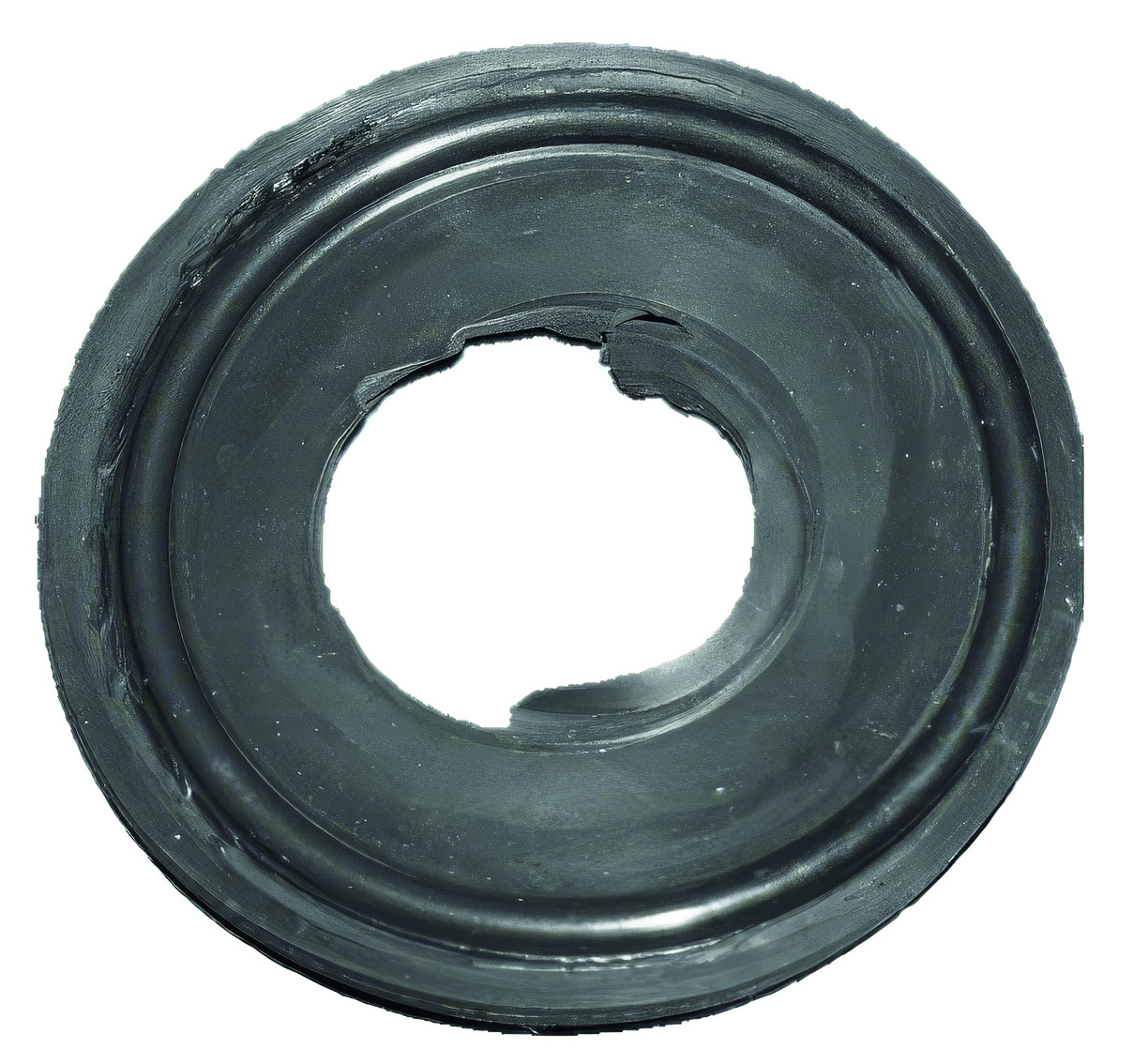
Seals are the most vulnerable parts of the bioreactor’s sterile boundary. Hygienic seals are designed to provide a seamless joint that prevents leaks and avoids product entrapment that impairs cleaning and sterilization. However, seals degrade over time and can be damaged or distorted during installation. Gaskets from hygienic clamp unions are particularly susceptible to damage from ferrule misalignment or over-tightening (see Figure 2). All seals that protect the process zone (e.g., sanitary gaskets, O-rings, valve diaphragms, or mechanical seals) should be inspected to determine if there is evidence of degradation, extrusion, or compromised integrity. If there is process residue outside of the process zone boundary, it should be documented and swabbed to see whether it contains a microbial match to the most recent contamination.
Figure 2: Seal failure is a common cause of bioreactor contamination.
When seal leaks are detected, further investigation is necessary to determine the contamination root cause. Potential factors in seal leakage may include the age and storage conditions of replacement seals, the time in service, the total time exposed to SIP and CIP conditions, the preventive maintenance frequency, and the standard procedures for seal installation. Seal integrity may be challenged through a variety of methods (e.g., pressure hold, helium leak testing) before and after use. Remediation of chronic seal integrity issues requires a comprehensive examination of all processes and procedures associated with the operation and maintenance of the bioreactor equipment.
Equipment Condition
Bioreactor disassembly is recommended to inspect product-contact surfaces for evidence of damage, corrosion, or surface irregularities that could compromise CIP and SIP operations’ effectiveness. For large production bioreactors, a tank entry may be necessary to thoroughly inspect all the product-contact surfaces. The equipment maintenance log should be consulted to confirm that preventive maintenance is up to date. If the investigation reveals a pattern of component failures, it may justify a change in maintenance frequency or procedures.
Equipment Testing
Besides visual inspections, a bioreactor process zone’s integrity may be further challenged through tests. Localized hydraulic testing (to challenge valve seals) and post-use filter integrity testing may be employed where equipment configuration allows. Helium leak testing can pinpoint hard-to-find leaks. CIP coverage testing can help verify that the bioreactor spray devices perform as designed. Likewise, SIP effectiveness may be evaluated using temperature indicating sticks, spore strips, or thermocouple temperature mapping in locations deemed most likely to see compromised steam exposure during SIP. Sterility/media hold studies can demonstrate the bioreactor’s ability to maintain an aseptic closed system before returning equipment to service. The industry practice for post-contamination testing varies based on the scale of operation, contamination history, and owner preferences.
A Case Study
A hypothetical case study can be constructed from experience with prior contamination investigations to illustrate a typical root cause analysis. A biopharmaceutical manufacturer experienced a series of contaminations in a stainless-steel production bioreactor system after years of successful operation. After the initial contamination, the bioreactor was quickly cleaned and sterilized to inoculate a new batch with additional scrutiny to ensure that all standard operating procedures were correctly followed. Subsequent contamination events established that the problem was consistently associated with one of three production bioreactors with identical seed trains and equipment design. Operators increased the SIP temperature in subsequent runs, but to no avail. It was determined that the contamination incidents started soon after the last shutdown for preventive maintenance.
The manufacturer then initiated a rigorous contamination investigation that included disassembling and inspecting the subsurface agitator system. It was discovered that the inboard O-ring seal for the agitator’s seal housing assembly was damaged during installation and had lost integrity. The breach was not detected by pressure hold testing because a secondary outboard seal prevented leakage (Figure 3). Following cleaning and replacement of the seals, the agitator assembly was installed, and subsequent runs were contamination-free.
Figure 3: An illustration of case study agitator seal design.
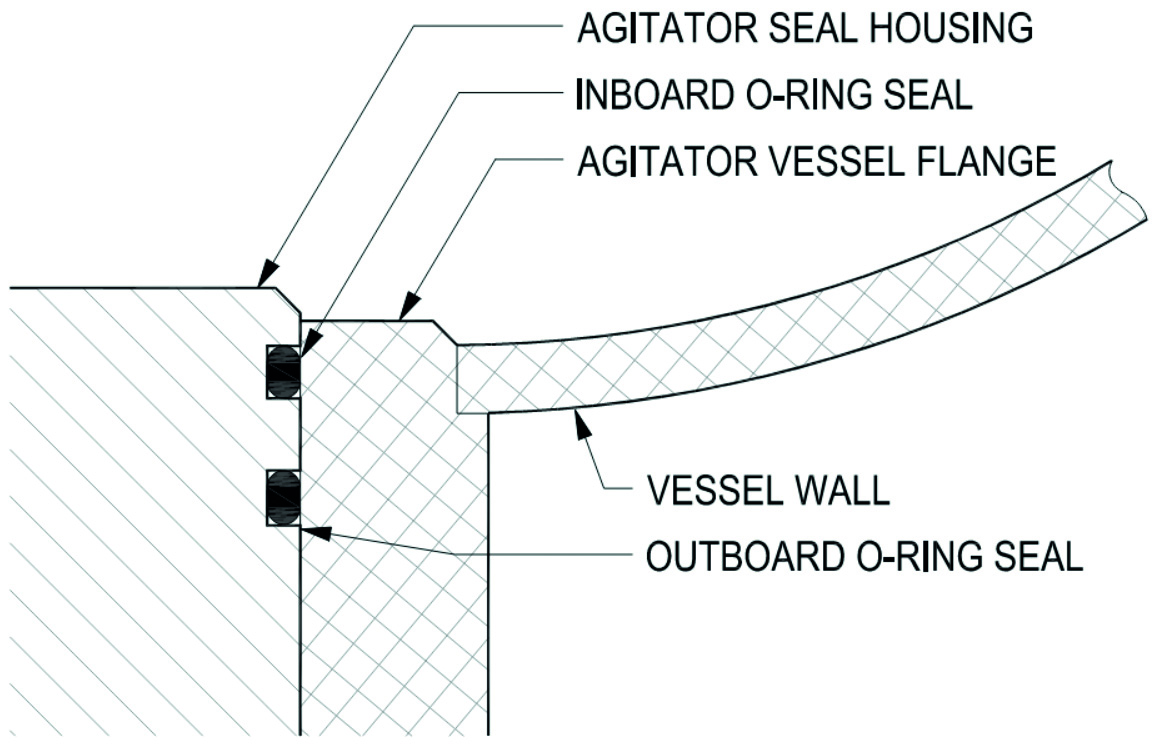
The subsurface redundant seals were originally designed to contain a catastrophic failure of the primary inboard seal. However, when the inboard O-ring is compromised, the annulus between the seals becomes a part of the process zone that is impossible to clean and sterilize, leading to culture contamination. This case illustrates how multiple factors—including equipment design, maintenance procedures, and human error—can align to compromise bioreactor integrity. In this case, the equipment design also affects the detectability of the seal breech.
Removing an agitator seal assembly housing is labor intensive and would normally occur annually to replace the mechanical seals for preventive maintenance. In this test case, the disassembly and visual inspection of the bioreactor seals on the seal housing assembly is the only way to identify the inboard seal failure. If there is no compelling reason, such as containment of a biohazardous culture, to retain the redundant seal design, one CAPA response recommendation could be to remove the outboard seal for future operation so that inboard seal failure can be detected by a routine pressure hold step in the future. This would provide a telltale so that primary seal leakage can be detected early.
Conclusion
Facility GMP compliance requires developing, applying, and maintaining a contamination control strategy (CCS) to manage risks to product safety6. Bioreactors typically require stringent controls because of their susceptibility to contamination. Bioreactor contamination events are always disruptive and costly. A good CCS will plan for both successful risk mitigation and contingencies for failure. Reliable, contamination-free bioreactor operation is achievable when robust facility, equipment, material, and procedural controls are in place. Organizations should see bioreactor contamination events as opportunities to revisit process risk assessment and establish or refine controls that will curb the probability of future recurrence.