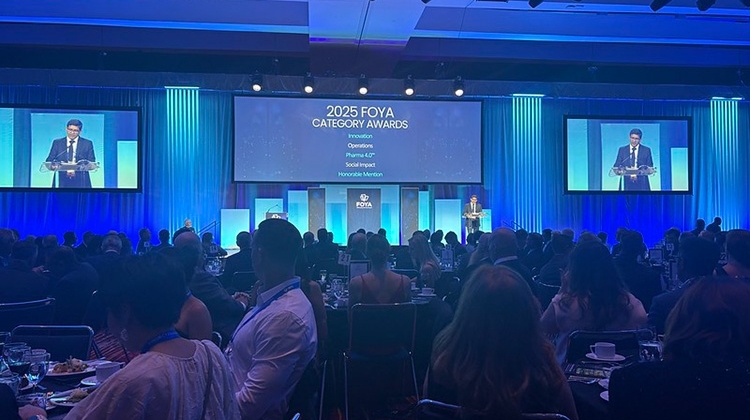
Inside FUJIFILM Biotechnologies’ 2026 ISPE Facility of the Year Awards (FOYA) Honorable Mention Project: Galaxy
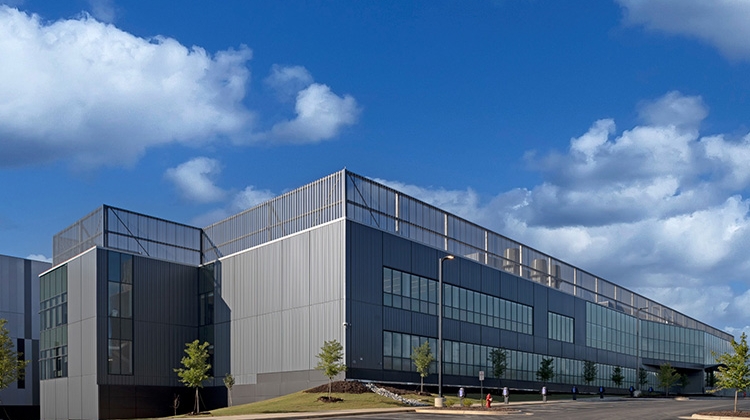
FUJIFILM Biotechnologies’ Galaxy project is redefining how large-scale biopharmaceutical manufacturing facilities are designed, built, and deployed. Recognized with an Honorable Mention in the 2026 ISPE Facility of the Year Awards (FOYA), the facility exemplifies how digital replication, modular construction, and Pharma 4.0™ technologies can accelerate the delivery of critical manufacturing capacity while improving safety, sustainability, and operational readiness.
Located in Holly Springs, North Carolina, USA, the nearly one-million-square-foot campus was created to serve as one of the largest end-to-end cell culture manufacturing facilities in North America. Designed to support global demand for biologic therapies, the site represents a significant milestone in FUJIFILM Biotechnologies’ long-term strategy to create a scalable and resilient manufacturing network capable of responding rapidly to patient needs.
The project reached a major operational milestone when teams successfully thawed their first vial of cells in fall 2025, demonstrating the facility’s readiness to begin supporting the production of life-changing medicines at commercial scale.
Why FUJIFILM Biotechnologies Won
The Galaxy project stands as a leading example of an emerging trend across pharmaceutical manufacturing: leveraging standardized facility designs, digital replication, and advanced execution technologies to accelerate project delivery while reducing risk.
Rather than approaching each facility as a completely unique project, FUJIFILM Biotechnologies embraced a “design once, build many” philosophy. By reusing proven facility designs, incorporating lessons learned from previous projects, and aligning construction and operations through digital tools, the company significantly improved predictability and execution speed.


At the same time, Galaxy integrated a proactive safety culture and ambitious sustainability goals, including measures supporting LEED Gold certification. Together, these efforts established a blueprint that can be replicated across future manufacturing facilities worldwide.
As biologics demand continues to grow globally, the project demonstrates how innovative facility delivery strategies can help manufacturers expand capacity more efficiently while maintaining high standards for quality, safety, and environmental responsibility.
A Manufacturing Facility Built for Scale
At the heart of the Galaxy project are two drug substance manufacturing buildings, each equipped with four 20,000-liter bioreactors and standardized upstream and downstream processing capabilities.
The facility was developed using FUJIFILM Biotechnologies’ proprietary kojoX™ modular replication strategy, a design framework built around harmonized equipment, layouts, processes, and operating procedures. Rather than starting from a blank sheet of paper, the company used its manufacturing facility in Denmark as the foundational blueprint for Galaxy.
This strategy has already proven highly successful. The Galaxy design itself has now been replicated five times, creating a scalable platform that enables rapid expansion while maintaining consistency across facilities.
According to Jordan Ulrich, Vice President, Project Delivery, the kojoX approach fundamentally changes how pharmaceutical facilities are delivered.
“Our kojoX approach allows us to build upon proven designs rather than starting from scratch with each new facility,” Ulrich said. “By leveraging a digitally replicated model with harmonized facility layouts, equipment, processes, and operating procedures, we have dramatically reduced design timelines and accelerated project execution.”
The results were significant. Digital replication and bespoke design tools reduced engineering costs by 50 percent, cut supplier design time by 80 percent, and improved overall efficiency by 70 percent.
Beyond the design phase, the replication strategy also reduces project risk. Teams are able to leverage existing as-built facility data, schedules, and operational insights when planning future projects. Lessons learned can be applied immediately, helping improve forecasting accuracy, reduce cost and schedule uncertainty, and streamline execution from project inception through startup.
Digital Replication Aligned with Pharma 4.0™
Galaxy’s success is closely tied to its extensive use of digital technologies and Pharma 4.0 principles.
Project teams implemented a comprehensive suite of advanced execution tools, including 4D construction simulation, AI-enabled progress monitoring, drone-based site oversight, and digital twin technologies. These tools provided real-time visibility into construction activities while improving coordination across project stakeholders.
One particularly innovative application involved the use of robotic layout technology. Autonomous inkjet printers translated digital designs directly onto concrete slabs, automatically marking floor plans with a level of precision difficult to achieve through traditional manual methods.
“With our core strategy of replication, precision in layout was paramount, and we’ve had great success in pairing robotic layout with our digital design,” Ulrich noted.
The company’s kojoX software platform played an equally important role. By leveraging data and designs from previous facilities, the software generated an initial design model that was approximately 75 percent accurate on the first iteration. This approach shortened the Galaxy design process by roughly one year and created a foundation for even faster deployment of future facilities.
Digital twins further enhanced collaboration among architects, engineers, construction teams, and operations personnel. By creating virtual representations of the facility before completion, project teams were able to identify potential issues earlier, improve constructability planning, and reduce costly rework during execution.
Safety by Design
Safety was another defining achievement of the Galaxy project.
Rather than treating safety as a standalone construction activity, FUJIFILM Biotechnologies embedded accident prevention directly into the design process. Through modularization and extensive offsite fabrication, many high-risk construction activities were eliminated before work ever reached the project site.
This strategy removed more than 1.7 million hours of high-risk work from the project, including approximately one million hours relocated away from the active construction site.
Additional safety initiatives included virtual reality-based training programs and a 24/7 onsite medical center providing both physical and mental health support for workers.
The results were exceptional. The project achieved more than 13 million safe work hours and recorded a total recordable incident rate of just 0.06, approximately 25 times better than the construction industry average.
“We developed a collective vision of safety and consistently embedded it into our decisions as design progressed,” Ulrich said. “The same replication principles of lessons learned that have made us more efficient have also made us safer through all project phases.”
Building Sustainability into Every Decision
In addition to advancing safety and digital innovation, Galaxy incorporates a broad range of sustainability initiatives designed to minimize environmental impact.
Water conservation strategies include replacing potable water usage in cooling towers entirely with reclaimed water. Energy efficiency measures include optimized utility systems, ultra-low NOx boilers, and heat recovery chillers that reduce overall energy consumption and emissions.
The facility also features a 1.3-megawatt rooftop solar array that contributes renewable energy directly to site operations.
Collectively, these initiatives are expected to reduce annual carbon dioxide emissions by more than 1,700 tons compared with similar conventional large-scale manufacturing facilities while supporting the company’s goal of achieving LEED Gold certification.
Creating a Blueprint for the Future
The Galaxy project demonstrates the growing value of digital replication and modularization in pharmaceutical facility delivery.
Historically, each manufacturing facility was treated as a unique project requiring extensive engineering, design, and validation efforts. FUJIFILM Biotechnologies has shown that a standardized and digitally enabled approach can dramatically improve speed, scalability, and predictability without sacrificing quality or operational performance.
Importantly, the principles behind Galaxy are adaptable across a wide range of project types and facility sizes. While manufacturing technologies and customer requirements may vary, a foundation built on common equipment standards, operating procedures, and digital systems can create efficiencies throughout an entire manufacturing ecosystem.
The Galaxy facility represents the first major step in a much larger vision. As part of FUJIFILM Biotechnologies’ long-term expansion strategy, the company ultimately envisions a network supporting 32 bioreactors of 20,000 liters each, strengthening the global supply of biologic therapies for patients worldwide.
Through Galaxy, FUJIFILM Biotechnologies has demonstrated how digital replication, modular construction, Pharma 4.0 technologies, and a safety-first culture can transform pharmaceutical project delivery. The facility’s recognition with a 2026 FOYA Honorable Mention highlights not only the project's impressive execution, but also its potential to serve as a model for the next generation of biopharmaceutical manufacturing facilities.