Digital Foundations for Pharma 4.0™: Key Insights from the 2026 ISPE Pharma 4.0™ and Biopharma Conference
As pharmaceutical manufacturers continue to advance their digital transformation strategies, a fundamental industry question remains: What capabilities must be in place to successfully deliver Pharma 4.0™?
While technologies such as artificial intelligence (AI), machine learning, advanced analytics, and automation often dominate discussions around digital transformation, sustainable success depends on a broader set of foundational capabilities. Data readiness, interoperable systems, governance frameworks, digital architectures, and scalable manufacturing platforms are all essential components of a mature Pharma 4.0™ strategy.
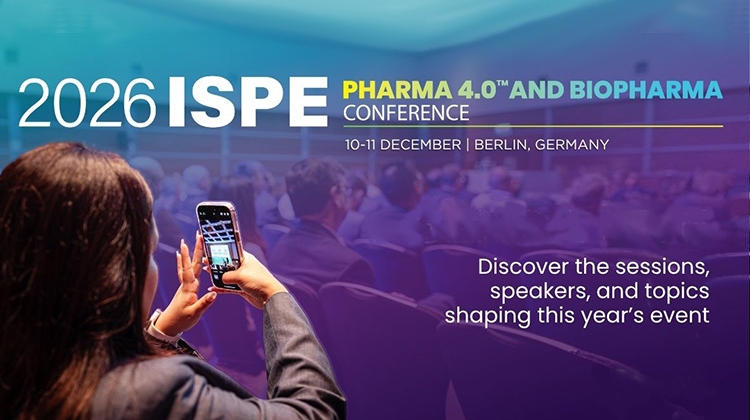
These topics will be explored in depth during the Pharma 4.0™ Enabling Digital Foundations track at the 2026 ISPE Pharma 4.0™ and Biopharma Conference, taking place 10-11 December in Berlin, Germany, and virtually.
Designed as a leading interdisciplinary platform for stakeholders across the pharmaceutical value chain, the conference will highlight recent innovations, emerging trends, and practical solutions to technical, operational, and regulatory challenges. The Pharma 4.0™ Enabling Digital Foundations track specifically focuses on the building blocks that make digital transformation possible, demonstrating how organizations are creating the infrastructure necessary to support innovation, operational excellence, and regulatory compliance.
What Are Digital Foundations in Pharma 4.0™?
Digital foundations are the technologies, processes, standards, and organizational capabilities that enable digital transformation at scale.
Key elements include:
- Data governance and data readiness
- System interoperability
- Modern information technology (IT)/operational technology (OT) architectures
- Manufacturing execution systems (MES)
- AI and machine learning enablement
- Modular manufacturing and automation
- Digital recipes and process standardization
- Portfolio governance and decision intelligence
Without these foundational capabilities, digital transformation initiatives often struggle to expand beyond isolated projects. The sessions within this track examine practical approaches for establishing these capabilities and creating durable frameworks for long-term success.
Examining a Decade of Pharma 4.0™ Transformation
The track begins with "ISPE Pharma 4.0™: A Decade Holistic Digital Transformation," presented by Michelangelo Canzoneri, Global Head of Group Smart Manufacturing at Merck KGaA Darmstadt, Germany, and Christian Woelbeling, Executive Industry Advisor at Körber Pharma Software GmbH.
This session examines the evolution of ISPE's Pharma 4.0™ initiatives and the industry's transition toward holistic digital transformation. The presentation explores how organizations are applying technologies such as AI, machine learning, augmented reality, and speech recognition across the pharmaceutical lifecycle, from development and clinical manufacturing through commercial production and technology transfer.
Attendees will gain insight into how digital operating models are helping organizations break down functional silos and align manufacturing, quality, and business objectives around common goals.
Real-World Lessons from a Large-Scale Digital Journey
Digital transformation strategies are most impactful when supported by measurable results.
In "Redefining the Transformation: PiSA's Mexico Digital Journey," Domenico Guida, Operations Director at PiSA Farmacéutica, and Ralf Wagner, Vice President for Data Driven Manufacturing/Insights Hub at Siemens, will present a real-world example of transformation in action.
The session highlights the implementation of live performance intelligence and digital escalation capabilities designed to improve operational visibility and accelerate decision-making at the shop-floor level. It also explores how advanced analytics, machine learning, and large language models are being incorporated into pharmaceutical manufacturing operations to unlock value from real-time data.
The presentation offers a practical example of how leading organizations are leveraging digital technologies to support operational excellence at scale.
Connecting Data to Strategic Investment Decisions
As organizations become increasingly data-driven, the ability to translate information into meaningful investment decisions becomes critical.
In "Driving CAPEX Decisions with Data and OKRs," Vanessa Akpore, CAPEX Projects and Portfolio Management at Takeda, will explore how objectives and key results (OKRs) can be used to strengthen governance and improve capital portfolio decision-making.
The session presents a framework for:
- Aligning investments with organizational strategy
- Establishing measurable outcomes
- Connecting portfolio governance to execution
- Improving prioritization of capital projects
By focusing on outcome-based decision-making, this presentation demonstrates how data can become a driver of strategic execution rather than simply a reporting tool.
Advancing AI Adoption Across Pharmaceutical Organizations
Artificial intelligence remains a major focus of Pharma 4.0™, but successful implementation requires more than technical deployment.
The session "Gamification to Drive AI Agent Impact & Adoption" examines how gamification can serve as a practical tool for accelerating organizational understanding and adoption of AI technologies. Drawing on experiences at UCB, the presentation explores how simulation-based learning environments help teams apply AI agents to realistic pharmaceutical scenarios, creating stronger engagement and more sustainable adoption.
The AI discussion continues with "Implementing an AI Use Case in Biopharma Operations," presented by Alexander Kunz, GxP Quality Expert Artificial Intelligence for Group SMARTfacturing at Merck KGaA Darmstadt, Germany.
As regulatory frameworks continue to evolve, including the development of Annex 22 guidance for AI and machine learning in regulated environments, the session provides a practical example of AI implementation designed with governance, validation, transparency, and lifecycle management considerations at its foundation. The presentation demonstrates how AI solutions can be developed in alignment with emerging regulatory expectations while supporting operational excellence.
Understanding the Roles of Process Analytical Technology (PAT) and AI in Smart Manufacturing
As pharmaceutical manufacturers deploy increasingly sophisticated digital tools, understanding the distinctions between PAT and AI becomes increasingly important.
In "PAT and AI in Pharma 4.0™: Siblings, Not Twins," Meike Roemer, Principal Expert PAT at Bayer AG, and Robert Hahnraths, Lead Quality Manager at Bayer AG, examine the similarities and differences between these two important technologies.
The presentation explores topics including:
- Model transparency and interpretability
- Validation and qualification approaches
- Lifecycle management considerations
- Emerging regulatory expectations
- Opportunities for integrated deployment
The session highlights how PAT and AI can complement one another to enable reliable, data-driven decision-making in pharmaceutical manufacturing environments.
Strengthening Interoperability Through Modular Manufacturing
Interoperability remains one of the cornerstones of digital transformation.
In "MTP Plug and Produce: A Three-Party Validation Dialogue," Jean-Luc Gerling, Innovation Manager and Solution Architect at Merck KGaA, Jeremy Ruiz, PhD, Senior Manager Global OT CSV at Lonza AG, and Thomas Makait, Managing Director of MTP4Pharma®, will discuss how module type package (MTP) standards can support flexible and compliant modular manufacturing environments.
The session examines how standardized module descriptions, orchestration capabilities, and validation strategies can significantly reduce qualification and computerized systems validation efforts while preserving regulatory compliance. The insights are drawn from ongoing work within the ISPE Pharma 4.0™ Plug and Produce Working Group and the global ISPE GAMP® community.
Reimagining MES for the AI Era
Manufacturing Execution Systems remain central to digital manufacturing ecosystems.
In "MES in Pharma 4.0™: AI-Driven Manufacturing Ecosystems," Hernan Vilas, CEO and Founder of HVILAS Consulting GmbH, and Thomas Halfmann, Head of Pharma Strategy & Growth at Eschbach GmbH, will examine how MES continues to evolve from a transactional system of record into a strategic platform for digital manufacturing.
The discussion includes topics such as:
- AI-enabled manufacturing operations
- Unified Namespace architectures
- Real-time data integration
- Modular and composable manufacturing systems
- Contextual integrity and compliance in regulated environments
Complementing this discussion, Carsten Pedersen, Director, Digital Manufacturing at NNIT, will present "Digital Recipes in MES – Where You Need to Be," exploring the industry's ongoing challenges with recipe implementation, maintenance, and lifecycle management.
Together, these sessions demonstrate why MES remains a critical component of the Pharma 4.0™ technology stack.
From IT/OT Integration to IT/OT Convergence
One of the track's most forward-looking discussions is "Stop Integrating, Start Converging," presented by Enzo Birindelli, CEO of Italia Automazione Srl, and Frank Maurer, Global Head of Automation Strategy and Technology at Boehringer Ingelheim Pharma GmbH & Co KG.
The presentation challenges traditional integration approaches and introduces Software Defined Automation as a pathway toward true IT/OT convergence. The speakers will examine the technical, organizational, and regulatory considerations associated with this transition while highlighting the role converged data environments play in supporting AI-enabled manufacturing, continuous process verification, and real-time decision-making.
Lessons Learned from Complex Transformation Programs
Large-scale digital transformation projects introduce significant technical and organizational complexity.
In "Big Bang! Challenges and Learnings," Philipp Kläsle, MES Integration Lead at Roche, alongside Mugunthan Maheswaran and Damian von Blarer of F. Hoffmann La Roche Ltd, will share lessons learned from replacing a highly integrated MES while simultaneously implementing new enterprise resource planning and warehouse management systems.
The session explores governance strategies, key performance indicator development, process alignment, testing challenges, and change management considerations that arise during large-scale transformation initiatives.
Unlocking Hidden Value in Existing Manufacturing Facilities
Digital transformation is not limited to greenfield facilities.
In "Unlocking Measurement Data: From Brownfield Constraints," Aurelie Demont, Segment Marketing Manager at Mettler Toledo, and Moira Schuler, Global CMC Manager at Wacker Biotech, demonstrate how legacy manufacturing environments can become sources of valuable operational intelligence.
Using a biologics facility originally built in the 1980s as a case study, the session explores how measurement data can be integrated into centralized platforms to support advanced analytics and predictive manufacturing while preserving existing automation investments.
Why the Pharma 4.0™ Enabling Digital Foundations Track Matters
The Pharma 4.0™ Enabling Digital Foundations track provides a comprehensive look at the capabilities required to support digital transformation across pharmaceutical manufacturing.
Through real-world examples, implementation strategies, and expert perspectives from organizations including Bayer, Boehringer Ingelheim, Lonza, Merck, Mettler Toledo, NNIT, Roche, Siemens, Takeda, UCB, and Wacker Biotech, the track demonstrates how strong digital foundations enable greater transparency, faster decision-making, enhanced compliance, and improved operational resilience.
By focusing on the core infrastructure that supports innovation, the track highlights the essential role of data, interoperability, governance, and digital architectures in advancing the next generation of Pharma 4.0™.
Join the Conversation in Berlin
The 2026 ISPE Pharma 4.0™ and Biopharma Conference provides a global forum for exploring the technologies, frameworks, and strategies shaping the future of pharmaceutical manufacturing.
The Pharma 4.0™ Enabling Digital Foundations track showcases how organizations are establishing the digital backbone necessary to support AI adoption, smart manufacturing, connected operations, and sustainable transformation.