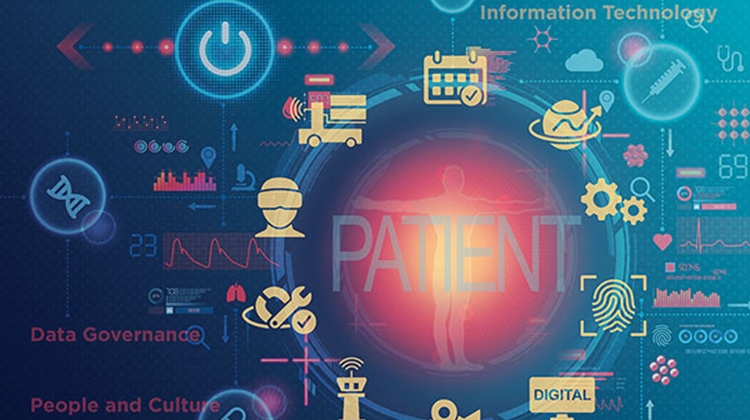
The pharmaceutical industry stands at a pivotal moment. The tools of Pharma 4.0™, artificial intelligence (AI)/machine learning (ML), Internet of Things, process analytical technology, blockchain, and advanced analytics, promise faster, smarter, and more resilient operations. But as organizations accelerate digital adoption, many discover a hard truth: technology alone doesn’t transform an enterprise, the new ISPE Good Practice Guide: Pharma 4.0™ – Holistic Digital Enablement can provide some meaningful solutions.
Sustainable impact comes from aligning people, processes, governance, and culture with the right technologies, holistically, “the content of the guide is focused on the problem statements, related to dynamic technology, regulatory, data governance, workforce knowledge gaps, challenges with legacy systems and providing solutions with a laid out plan,” said Guide Co-Lead, Yvonne Duckworth, PE, Senior Fellow, Digital Technology, CRB.
Built for a cross-functional audience, from manufacturing, quality, and regulatory to information technology (IT)/operational technology (OT), research and development, supply chain, human resources, and commercial, the Guide reframes digital transformation as an enterprise capability, not a collection of tools. This Guide is for anyone who influences how organizations use data, systems, or automation.
Beyond Tools: Orchestrating Culture, Capabilities, and Connectivity
Pharma 4.0 is not a single project or platform. It’s a connected operating model that integrates modern technologies with robust data governance, cybersecurity, and change management. Done well, it reduces cost and variability, raises quality, and shortens cycle times, ultimately improving patient outcomes. But those gains depend on:
- Leadership and cross-functional collaboration to align investment with value and risk
- Data governance and standardization to ensure integrity, traceability, and interoperability
- Workforce enablement—cultivating critical thinking, digital literacy, and a culture of continual learning
- Fit-for-purpose frameworks for validation, compliance, and lifecycle quality management
What’s in Scope—and What’s Not
The Guide is intentionally not a step-by-step manual. According to guide Co-Lead, Nuha Al-Hafez, Senior Director Quality Systems, Fujifilm Biotechnologies, “it offers adaptable, best-practice strategies that meet organizations where they are, regardless of digital maturity, helping translate business and compliance needs into actionable roadmaps across IT, OT, and digital platforms”. The Guide complements cornerstone ISPE resources (e.g., ISPE GAMP® 5 Guide (Second Edition), ISPE Baseline Guide: Pharma 4.0™, and related guides) and the ISPE Advancing Pharmaceutical Quality (APQ) Guide: Cultural Excellence, creating a connected framework that can be tailored based on context.
The Critical Enablers
Five pillars stand out:
Knowledge Management (KM)
Digitization amplifies both value and volume of knowledge. To embed process understanding into automated systems, organizations need structured, machine-usable knowledge, not just standard operating procedures (SOPs) and wikis optimized for human readers. Effective KM clarifies steps, deviations, triggers, and alternatives across the lifecycle, bridging tacit expertise and digital execution.
Critical Thinking
Tools don’t replace judgment. Teams must interrogate data, challenge assumptions, and interpret signals from statistical process control charts, out-of-specification (OOS) investigations, and multivariate analytics to drive true root cause analysis and continuous improvement.
Data Governance
ALCOA++ principles, standardized metadata, lineage, and master data discipline are non-negotiable. Strong governance reduces remediation costs, supports AI/ML transparency, and ensures compliance across evolving regulatory frameworks.
Standardization and Interoperability
Harmonized architectures and data models (across IT/OT) unlock scalability, enabling digital twins, advanced analytics, and end-to-end traceability.
People and Culture
The biggest risks aren’t technical, they’re organizational. Closing skill gaps (data science, AI, cybersecurity), onboarding talent from adjacent industries with pharma-specific training and rewarding learning and experimentation are essential to sustained change.
Navigating Real-World Constraints
Pharma’s regulatory and operational realities can complicate the journey:
- Dynamic regulatory landscape: Agencies are adapting to digitalization with new pathways and dialogue mechanisms. Organizations must engage early, validate rigorously, and design for transparency.
- Legacy systems and fragmented data: Without integration and standardization, analytics stall and risks rise. “You have to figure out in a thoughtful way, how to deal with the challenges of legacy systems and develop a transition plan,” said Guide Co-Lead, Jason Schneider, Associate Director, BTS Operations Compliance, AbbVie Inc.
- Cybersecurity and privacy: As connectivity grows, so does the attack surface—demanding defense-in-depth and resilient architectures.
- Complex information management: As data volume and variety expand, the ability to structure, govern, and operationalize knowledge becomes mission-critical.
- Business continuity: Digital enablement must be resilient by design—planned for disruption, dependency, and recovery.
Digital transformation in pharma is not accomplished by deploying tools, it’s earned by orchestrating people, processes, governance, and technology toward shared outcomes. With a holistic approach, organizations can move beyond isolated pilots to durable capabilities that elevate quality, agility, and patient trust. That’s Pharma 4.0 at its best, and the path this Guide is designed to help teams lead.
Get the Guide