Inside Hepalink’s 2026 ISPE Facility of the Year Awards (FOYA) Innovation – Novel Technology Category Award-Winning Project: Shenzhen Hepalink Pingshan New Pre-filled Syringe Manufacturing Facility
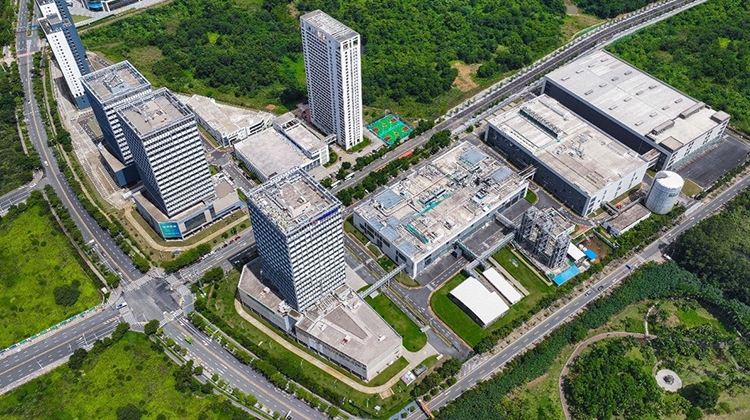
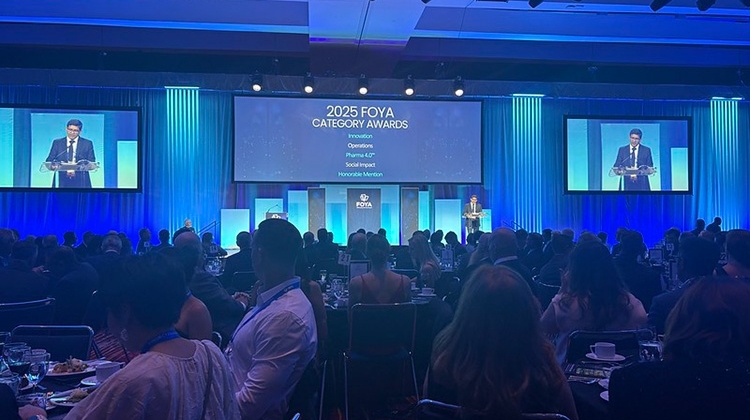
Hepalink Pharmaceutical Group Co., Ltd. has earned recognition in the 2026 ISPE Facility of the Year Awards (FOYA) Innovation – Novel Technology category for its groundbreaking Shenzhen Hepalink Pingshan New Pre-filled Syringe Manufacturing Facility. The award recognizes facilities that demonstrate the innovative application of manufacturing technologies, facility design, and engineering solutions that advance the future of pharmaceutical production.
Located in Shenzhen, China, the nearly 300,000-square-foot facility was designed to address a critical global healthcare need: securing the supply of enoxaparin sodium injection, an essential anticoagulant used worldwide. With the capacity to produce 330 million pre-filled syringes annually, the site combines advanced digital technologies, AI-powered manufacturing, automated logistics, and a vertically integrated design to establish a new benchmark for pharmaceutical manufacturing excellence.
Why Hepalink Won
The Shenzhen Hepalink Pingshan facility stands out for its ability to solve multiple industry challenges through a highly integrated approach that combines digital innovation, engineering ingenuity, and operational resilience.
Developed in one of China's most land-constrained urban environments, the facility reimagines traditional pharmaceutical manufacturing layouts by building vertically instead of horizontally. At the same time, Hepalink integrated a sophisticated digital infrastructure powered by 5G connectivity, artificial intelligence, digital twin technology, and AGV-assisted automated material-transfer systems.
Together, these innovations create a manufacturing ecosystem that improves efficiency, enhances sterility assurance, increases production capacity, and strengthens supply chain resilience.
The facility's performance and technological advancements earned recognition as a pharmaceutical manufacturing "lighthouse project" and secured its place among China's pioneering 5G-enabled pharmaceutical manufacturing sites.


As Caixue Wei, Vice President of Manufacturing and Operations, Global Industrial Affairs at Hepalink, explained, "The facility provides a stable and replicable model for large-scale, high-standard sterile pre-filled syringe manufacturing.”
A 5G-Enabled Manufacturing Ecosystem
One of the facility's most transformative innovations is its fully integrated 5G multi-access edge computing architecture.
The system delivers network latency of less than 10 milliseconds while maintaining local closed-loop data management, ensuring both rapid communication and data sovereignty. This digital foundation supports virtually every aspect of operations, from automated material transport to environmental monitoring and facility management.
Enhanced Safety
The 5G network provides continuous, high-speed connectivity for autonomous guided vehicles (AGVs) and digital operator terminals throughout the facility. Combined with AI-enabled vision systems, a 5G-powered "electronic fence" monitors operations in real time and identifies unsafe behaviors before incidents occur.
The system also supports millisecond-level collision avoidance for AGVs, significantly reducing operational risk while enhancing personnel safety.
Improved Speed and Performance
Real-time equipment connectivity enables AI-powered visual inspection systems that operate at efficiencies far beyond traditional manual inspection methods. The facility's logistics network achieves an impressive 99.99 percent delivery stability, ensuring consistent movement of materials throughout production.
Greater Efficiency
The digital ecosystem enables one operator to manage multiple machines while facilitating coordinated control across environmental monitoring, building management, and utility systems.
The facility achieved an 18 percent reduction in unit energy consumption. In addition, its thermal energy storage and intelligent energy-management measures generate estimated annual electricity savings of approximately RMB 4.09 million, or US$560,000.By replacing conventional wired and Wi-Fi infrastructure, the facility also reduces cabling complexity and long-term maintenance requirements.
AGV-Assisted Automated Material Transfer Improves Logistics Efficiency and Production Coordination
The project uses AGVs and conveyor lines for items and totes in key material-transfer steps. Operators remain responsible for scheduling confirmation, process handover, and exception handling. This reduces frequent manual handling and unnecessary contact while improving logistics efficiency, production coordination, quality, and safety management.
Materials move autonomously from the warehouse directly to production areas without human intervention, eliminating one of the industry's most common contamination risks.
This innovative system delivered measurable results. The facility achieved a 100 percent success rate during its first media-fill simulation and process validation activities, demonstrating exceptional sterility assurance.
The approach also eliminated the need for flammable isopropyl alcohol spraying in production areas and significantly reduced warehouse logistics staffing requirements, decreasing headcount from 50 personnel to 18 while maintaining operational effectiveness.
AI-Enabled Inspection and Process Integration Improve Quality and Efficiency
Large-scale pre-filled syringe production requires stable filling, reliable material handling, and consistent inspection. Hepalink uses an all-in-one nest removal and inspection machine, multi-camera image capture, and AI recognition to help identify bubbles, particles, scratches, and cracks, improving inspection consistency and critical-defect detection.
Hepalink developed several innovative solutions to overcome these obstacles.
A key breakthrough was the implementation of an all-in-one nest removal and inspection machine powered by deep-learning AI technology. By combining two manufacturing operations into a single platform, the system minimizes glass-to-glass contact while dramatically improving inspection performance.
The system achieves inspection throughput of 24,000 units per hour while delivering 100 percent defect detection capability.
Advanced AI models further enhance inspection accuracy by distinguishing harmless air bubbles from particulate contamination and identifying scratches, cracks, and other defects that could affect product quality.
Working closely with equipment suppliers, Hepalink also optimized plunger pump tolerances to address pump seizing concerns associated with high-viscosity formulations.
Together, these innovations create a highly reliable manufacturing process specifically optimized for complex injectable products.
Digital Twin Technology Enhances Operational Resilience
Another distinguishing feature of the project is its use of a digital twin collaboration model connecting Hepalink's Pingshan and Nanshan facilities.
Unlike traditional digital twins that primarily support facility design and construction, Hepalink's model remains an active operational tool supporting ongoing collaboration between the two sites.
Shared systems provide real-time visibility into inventory levels, production schedules, quality metrics, warehouse operations, and supply chain data. The platform enables plug-and-play recipe transfer between facilities and facilitates rapid deployment of personnel, materials, and technical expertise as needed.
"The digital twin model is not limited to design and construction," said Wei. "It remains a live operational backbone for ongoing dual-site collaboration between the two sites. This significantly enhances operational resilience."
This integrated approach strengthens business continuity and helps protect the global supply of critical medicines against potential disruptions.
Vertical Integration Maximizes Limited Urban Space
Shenzhen's limited industrial land availability required a different approach to facility design.
Rather than constructing a traditional horizontal manufacturing campus, Hepalink developed a vertically integrated production model centered around a 24-meter-high automated stereoscopic warehouse embedded within the facility's core.
Raw materials, components, and packaging materials move vertically through the facility using spiral conveyor systems, reducing transportation distances and improving process flow.
The result is a 52 percent increase in space utilization compared with conventional pharmaceutical manufacturing layouts.
Beyond maximizing valuable urban real estate, the vertical design improves operational efficiency and strengthens connectivity between production, warehousing, and logistics functions.
Securing the Global Supply of a Critical Medicine
The Shenzhen Hepalink Pingshan New Pre-filled Syringe Manufacturing Facility demonstrates how advanced engineering, digitalization, and innovative facility design can redefine pharmaceutical manufacturing.
More than simply expanding production capacity, the project provides a practical model for large-scale, high-standard sterile pre-filled syringe manufacturing in a land-constrained environment. By integrating 5G connectivity, AI-enabled inspection, digital collaboration, AGV-assisted automated material transfer, and vertical facility design, Hepalink has created an efficient, stable, and resilient manufacturing platform.
The facility's achievement of EU GMP certification further validates its world-class design, operational excellence, and commitment to patient safety.
By ensuring reliable access to a critical anticoagulant therapy while demonstrating the future potential of digitally enabled pharmaceutical manufacturing, Hepalink has earned its place among the industry's most innovative facilities and a worthy recipient of the 2026 ISPE Facility of the Year Awards Innovation – Novel Technology category honor.