

Conference Highlights
Learn More About the 2026 ISPE Aseptic Conference

Upgrading Freeze-Dryer Loading for Annex 1 Compliance: Key Insights Ahead of the 2026 ISPE Aseptic Conference
As regulatory expectations around aseptic manufacturing continue to evolve, Annex 1 has sharpened industry focus on one of the most contamination-sensitive stages of lyophilization: freeze-dryer loading and unloading. Ensuring Grade A continuity, minimizing operator intervention, and preserving unidirectional airflow are no longer aspirational goals—they are baseline requirements that challenge both new and legacy facilities.

Explore the Future of Radiopharmaceuticals, High Potency Compounds, and Facility Design at the ISPE Aseptic Conference
Aseptic manufacturing has a highly complex set of requirements to protect patients. Add other hazards and the solution to each problem becomes more complex. Join industry experts and regulators at the 2026 ISPE Aseptic Conference to discuss some of these more complex products and the requirements they impose on processes, facilities, and regulations.

Is Aseptic Processing at Risk? Navigating New Demands
For over a decade, the aseptic processing industry has pushed boundaries with increasingly advanced techniques—driven by factors that will take center stage at the upcoming 2026 ISPE Aseptic Conference.
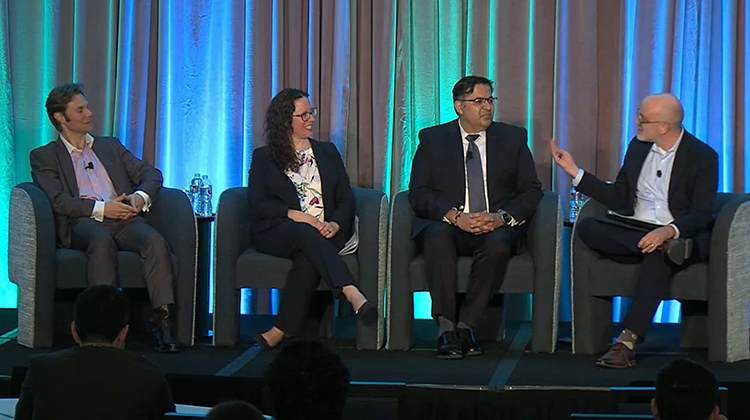
Aseptic Innovation in Focus: 2025 Session Takeaways Ahead of the 2026 ISPE Aseptic Conference
Explore two standout sessions from the 2025 ISPE Aseptic Conference that offer a glimpse into the valuable discussions shaping the 2026 ISPE Aseptic Conference. Featuring thought leaders across the industry, these sessions include “Industry Panel: Challenges of New Modalities: Radiopharmaceuticals, Cell and Gene Therapies, and Antibody Drug Conjugates” and “Navigating Annex 1 Compliance: Strategies and Learnings.” Viewed together, these sessions illuminate the emerging technical and regulatory priorities—spanning next-generation modalities, contamination control, and Annex 1 implementation—that will continue to drive conversations in 2026. Watch now to gain early insight ahead of the 2026 ISPE Aseptic Conference, taking place 23–24 March in Washington, D.C., USA, and virtually. generation modalities, contamination control, and Annex 1 implementation—that will continue to drive
Modernizing with Purpose: Technology-Enabled Advancements in Aseptic Processing
Aseptic manufacturing is entering a period of accelerated change, reshaped simultaneously by evolving global regulatory expectations and increasingly complex product portfolios. At the same time, the push for greater operational flexibility and reduced human intervention is raising the bar for control, consistency, and operational speed. The pressure is amplified by overarching realities that the industry faces, such as the rapid pace of innovation in barrier technologies, escalating expectations for data-driven environmental monitoring, and the need to modernize legacy processes without disrupting ongoing commercial supply. Collectively, these factors have begun to transform operational strategies and influence how the industry designs, monitors, and qualifies aseptic processes.

Reasons to Attend the Component Quality Track at the 2026 ISPE Aseptic Conference in Washington, D.C., USA
The movement toward ready-to-use (RTU) and ready-to-fill (RTF) primary packaging has reached a pivotal moment. Regulators are tightening expectations, supply chains are stressed, and manufacturers are balancing cost with contamination control. The Component Quality track at the 2026 ISPE Aseptic Conference gathers three practice-focused presentations that together provide evidence, methods, and orientation to improve product quality, lower the total cost of ownership, and help organizations design future-ready filling operations.

Shaping the Future of Aseptic Manufacturing: Digital Design, Automation, and Airflow Verification
The revised EU GMP Annex 1 has placed renewed emphasis on developing a holistic approach to contamination control: leveraging barrier technologies, automation, rapid microbial methods and proactive management of airflow patterns, compelling manufacturers to rethink how aseptic systems are designed, qualified, and operated. With these evolving regulatory expectations and growing complexity in aseptic processing, the pharmaceutical industry is entering a new era of digitally enabled, highly automated manufacturing.

Discover the Future of Sterile Manufacturing at the 2026 ISPE Aseptic Conference
ISPE has once again assembled the most comprehensive industry conference on aseptic manufacturing that all should attend. The planning committee began their efforts within days of last year’s outstanding conference, with this year’s building upon the learning of last year. The speakers at this year’s conference are shaping the future of aseptic processing and sterile manufacturing.

Shaping the Future of Advanced Therapies
Advanced therapy medicinal products (ATMPs) are redefining the boundaries of modern medicine. These cutting-edge treatments offer unprecedented opportunities to address complex diseases and deliver life-changing outcomes for patients. Yet, as this field rapidly evolves, so do the challenges—ranging from regulatory frameworks to manufacturing agility. To stay ahead, the industry must embrace innovation, collaboration, and resilience. The 2026 ISPE Aseptic Conference provides the perfect platform to explore these critical themes, bringing together experts to share insights and chart the path forward for ATMP manufacturing.

Annex 1 Case Studies and Practical Insights: Turning Expectations into Evidence at the 2026 ISPE Aseptic Conference
EU GMP Annex 1 has pushed sterile manufacturing conversations from “what does it mean?” to “how is it proven?” Annex 1 requires a facility-wide, integrated contamination control strategy (CCS) that defines critical control points, verifies the effectiveness of design and operational controls, and is actively reviewed to drive continual improvement.